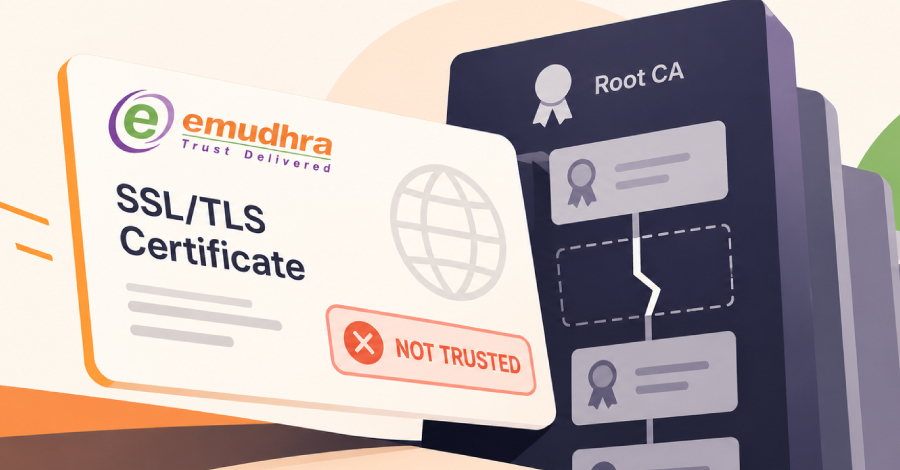
eMudhra, hind sertifikatlash organi (CA), o'zining global SSL/TLS sertifikat biznesidan chiqadi, deb payshanba kuni uning kengashi qaror qildi. Bu qaror tadqiqotchi sakkizta oraliq CA sertifikatlarining shaxsiy kalitlarini tiklaganini xabar qilganidan besh kun o'tib qabul qilindi.
eMudhra ta'sirlangan mijozlar sertifikatlarini hamkorlardan bepul sertifikatlar bilan almashtirishini aytdi, ammo e'lonida hamkorlar nomini yoki chiqish sanasini ko'rsatmadi.
Sakkiztadan oltitasi veb-sayt (TLS) sertifikatlari uchun edi. Chrome ularning yuqoridagi eMudhra ildiz sertifikatiga ishonishni to'xtatadi, emSign ECC Root CA - G3. O'zgarish foydalanuvchilarga 27-oktabr, Tinch okeani vaqti bilan ertalab yetib borishi kutilmoqda.
20-oktabrda Mozilla Firefox'da xuddi shu ildizga ishonishni to'xtatishga qaror qildi. Ildizni brauzerdan olib tashlash uning ostida berilgan qonuniy sertifikatlarni ham kesib tashlaydi.
21-oktabr holatiga ko'ra, Chrome'ning jamoat Sertifikat Shaffofligi (CT) jurnallarini hisoblashiga ko'ra, bu ildizga bog'langan taxminan 30 800 amal qiladigan sertifikat bor edi. Ulardan 99,9% InCommon orqali berilgan, bu Internet2 tomonidan oliy ta'lim hamjamiyati uchun yaratilgan sertifikat xizmati. InCommon bu yil aprel va iyul oylari orasida xizmatni eMudhra'ning CertiNext platformasiga ko'chirgan.
Google bu ildiz ostidagi sertifikatlarga ega veb-sayt operatorlariga "darhol Chrome Root Store'da kiritilgan boshqa PKI ierarxiyasidan yangi TLS sertifikatini olish va o'rnatishlari kerak" deb aytdi.
O'tish tugaguncha, eMudhra o'zining G1 RSA ildiz sertifikatlari mijozlarga xizmat qilishda davom etishini aytdi. G1 ECC ildizidan alohida ierarxiya, ammo Chrome hali ham eMudhra'ning qolgan CA sertifikatlarini o'z ildiz do'konida saqlash yoki saqlamaslikni hal qilmoqda.
eMudhra o'zining bekor qilish va holat xizmatlarini har bir berilgan SSL/TLS sertifikati muddati tugaguncha yoki almashtirilguncha ishlatishda davom etadi. Uning boshqa bizneslari, jumladan raqamli imzo sertifikatlari, eSign va InCommon foydalanadigan CertiNext platformasi davom etadi.
E'lon InCommon haqida hech narsa aytmaydi, yoki eMudhra G1 ostida yangi sertifikatlar berishni to'xtatguncha davom ettiradimi yoki yo'qmi, deb aytmaydi.
eMudhra global SSL/TLS biznesi daromadining taxminan 1% ni tashkil etishini aytdi. Ma'lumot suvereniteti va muvofiqlik qoidalari uni boshqarishni murakkab va qimmat qiladi, va ba'zi yirik provayderlar sertifikatlarni bepul berishadi.
Ijtimoiy tarmoqlarda hodisaning tarqalishi ham "SSL/TLS'ning biznesimizdagi o'rniga nisbatan mutanosib tekshiruv" olib keldi, deb aytdi kompaniya.
Tadqiqotchi zaif kalitlarni 17-oktabrda Apple, Google, Microsoft, Mozilla va eMudhra'ga xabar qildi. Har bir shaxsiy kalit ulkan tasodifiy son bo'lishi kerak edi, ammo sakkiztasi ham 256 dan past edi, shuning uchun har kim ularni deyarli darhol topishi mumkin edi.
Chrome va Firefox oltita TLS oraliqlarini bir necha soat ichida blokladi. Ulardan hech qanday veb-sayt sertifikati Chrome bloklashidan oldin CT jurnallarida paydo bo'lmagan, shuning uchun Chrome yoki CT jurnalini talab qiladigan boshqa dasturiy ta'minotga qarshi ishlatilishi mumkin emas edi, deb aytdi Google.
eMudhra sakkiztani veb-saytlar yoki foydalanuvchilarga sertifikat berish uchun hech qachon ishlatmaganini va tizimlari buzilmaganini aytdi.
Sertifikat Egasiga Nima Qilish Mumkin
Cornell o'z sertifikat egalariga ECC o'rniga RSA sertifikatlarini so'rashni aytdi, chunki "RSA sertifikatlari eMudhra'ning ta'sirlanmagan ildizidan foydalanadi va ishlashi kerak." Universitet o'zining 300 dan ortiq ta'sirlangan sertifikatini hisoblaydi.
Michigan universiteti InCommon'ning RSA sertifikatlari hozircha ta'sirlanmaganini, ammo ularning ildizi "ham ishonchsiz bo'lishi mumkin" deb aytdi. Hozircha uning asosiy alternativasi Let's Encrypt.
eMudhra taxminan 30 000 sertifikat ko'chirilishi kerakligini va ularning taxminan 97% ACME protokoli yordamida berilganini, bu ko'plab serverlar sertifikatlarni avtomatik so'rash va yangilash uchun foydalanadigan protokol, deb baholadi.
Chrome eMudhra'ga standart ACME mijozlari sertifikatlarni yangilash oynasidan tashqarida almashtirmasligini, agar ular ACME Yangilash Ma'lumoti (ARI) ni qo'llab-quvvatlamasa yoki kimdir qo'lda aralashmasa, deb aytdi. ECC ierarxiyasidan RSA ierarxiyasiga o'tish mijoz sozlamalariga o'zgartirishlar kiritishni ham talab qilishi mumkin.
eMudhra'ning RSA Ildizi Haqida Savollar
Mozilla 20-oktabrda hozircha G1 ildiziga, emSign Root CA - G1, ishonchni olib tashlamasligini aytdi. Stanford'da InCommon sertifikatlari bu ildizga eMudhra CA, emSign Root TLS CA - G1, orqali bog'lanadi.
14-oktabrda eMudhra emSign Root TLS CA - G1 uchun sertifikat bekor qilish ro'yxatini (CRL) e'lon qildi. CRL CA bekor qilgan sertifikatlarning imzolangan ro'yxati. Bu ro'yxatning imzosi o'sha CA'ning o'z kaliti bilan tekshirilmaydi, deb aytdi zaif kalitlarni xabar qilgan tadqiqotchi Mozilla'ning hodisa haqidagi jamoat xato hisobotida.
Xuddi shu xato hisobotidagi ishtirokchi 22-oktabrda ro'yxat eMudhra OCSP sertifikati kaliti bilan imzolangan ko'rinishini aytdi. OCSP sertifikatlari sertifikat bekor qilinganmi yoki yo'qmi, degan javoblarni imzolaydi. Ishtirokchi bu "boshqa zaif kalit dalili emas, balki noto'g'ri imzo kalitidan foydalanish holati" deb yozdi.
Chrome 21-oktabrda ro'yxatni ko'tardi, xato hisobotiga joylashtirgan 12 savolidan birida. U qaysi kalit imzolaganini va eMudhra bu CA yoki har qanday ildizlari uchun bir nechta kalit juftiga egami yoki yo'qmi, deb so'radi.
Chrome shuningdek, mijozlar G1 ga, boshqa kompaniya CA siga yoki ikkalasiga ham o'tmoqdami, va 27-oktabrda rejalashtirilgan olib tashlashni hisobga olgan holda, barchasi qachon ko'chganini so'radi. eMudhra 20-oktabrda G1 "yagona mavjud alternativ" ekanligini va ertasi kuni ta'sirlangan AQSh mijozlariga "boshqa, mustaqil ishlaydigan, jamoat ishonchli CA ierarxiyasidan" yangi sertifikatlar berayotganini aytdi.
2025-yilda eMudhra xuddi shu oraliqlarning oltitasi uchun yaroqsiz CRL'larni e'lon qildi. O'sha paytdagi hodisa hisobotida ularni "har bir Oraliq CA bilan bog'liq tegishli shaxsiy kalit yordamida CRL'larni qayta yaratish" orqali tuzatganini aytdi.
19-oktabrda eMudhra Mozilla'ga bu ro'yxatlar avval foydalanmoqchi bo'lgan kalitlar bilan imzolanganini aytdi. Bu yaroqsiz imzolarni keltirib chiqarganda, ular "bu oy topilgan zaif kalitlar bilan qayta imzolangan", deb aytdi.
Chrome bu ochiqlik "eMudhra'ning 2025-yil hodisasi davomida va undan keyin shaffofligi va hodisani boshqarishi haqida jiddiy xavotirlar tug'diradi" deb aytdi. U 2025-yil hisobotida nima uchun bu CA'larning har biri uchun ikkita kalit jufti mavjudligi haqida eslatilmaganini so'radi.
Payshanba kuni 13:31 UTC holatiga ko'ra, eMudhra Chrome'ning savollariga xato hisobotida jamoat ravishda javob bermagan. U yerda oxirgi ko'rinadigan izohi 20-oktabrda joylashtirilgan.
eMudhra, an Indian certificate authority (CA), will withdraw from its global SSL/TLS certificate business, its board decided on Thursday. The decision came five days after a researcher reported recovering the private keys of eight of its intermediate CA certificates.
eMudhra said it will replace affected customers' certificates with free ones from partners, though its announcement did not name the partners or provide a date for the exit.
Six of those eight were for website (TLS) certificates. Chrome will stop trusting the eMudhra root certificate above them, emSign ECC Root CA - G3. The change is expected to reach users on the morning of October 27, Pacific time.
On October 20, Mozilla decided to stop trusting the same root in Firefox. Removing a root from a browser also cuts off legitimate certificates issued beneath it.
About 30,800 unexpired certificates chained to that root as of October 21, by Chrome's count of public Certificate Transparency (CT) logs. Of those, 99.9% were issued through InCommon, the certificate service Internet2 created for the higher education community. InCommon moved the service onto eMudhra's CertiNext platform between April and July this year.
Google has told website operators with certificates under that root that they "must immediately acquire and install a new TLS certificate from another PKI hierarchy included in the Chrome Root Store."
Until the transition is complete, eMudhra said, its G1 RSA root certificates will continue to serve customers. G1 is a separate hierarchy from the ECC root, but Chrome is still deciding whether to keep eMudhra's remaining CA certificates in its root store.
eMudhra will keep its revocation and status services running until every SSL/TLS certificate it issued has expired or been replaced. Its other businesses, including digital signature certificates, eSign and the CertiNext platform InCommon uses, will continue.
The announcement does not mention InCommon, or say whether eMudhra will keep issuing new certificates under G1 until it exits.
eMudhra said the global SSL/TLS business brings in about 1% of its revenue. Data sovereignty and compliance rules make it more complex and costly to run, and some large providers give the certificates away free.
The incident's spread on social media has also brought "scrutiny that is out of proportion to SSL/TLS’s place in our business," the company said.
The researcher reported the weak keys to Apple, Google, Microsoft, Mozilla and eMudhra on October 17. Each private key should have been a huge random number, but all eight were below 256, so anyone could work them out almost instantly.
Chrome and Firefox blocked the six TLS intermediates within hours. No website certificate from them had appeared in CT logs before Chrome's block, so none could have been used against Chrome or other software that requires CT logging, Google said.
eMudhra said it never used the eight to issue certificates to websites or users, and that its systems were not breached.
What Certificate Holders Can Do
Cornell has told its certificate holders to request RSA certificates instead of ECC ones, because "RSA certificates use eMudhra's unaffected root and should work." The university counts more than 300 affected certificates of its own.
The University of Michigan says InCommon's RSA certificates are not currently affected, but that their root "could become distrusted, too." For now, its main alternative is Let's Encrypt.
eMudhra has estimated that about 30,000 certificates need to be moved, and that about 97% of them were issued using ACME, the protocol many servers use to request and renew certificates automatically.
Chrome has told eMudhra that standard ACME clients do not replace certificates outside their renewal window unless they support ACME Renewal Information (ARI) or someone steps in by hand. Moving from the ECC hierarchy to the RSA one may also need changes to client settings.
Questions Over eMudhra's RSA Root
Mozilla said on October 20 that, for now, it was not removing trust in the G1 root, emSign Root CA - G1. At Stanford, InCommon certificates chain to that root through an eMudhra CA called emSign Root TLS CA - G1.
On October 14, eMudhra published a certificate revocation list (CRL) for emSign Root TLS CA - G1. A CRL is the signed list of certificates a CA has revoked. This one's signature does not verify against that CA's own key, the researcher who reported the weak keys said in Mozilla's public bug report on the incident.
A participant in the same bug report said on October 22 that the list appears to have been signed with the key of an eMudhra OCSP certificate. OCSP certificates sign answers about whether a certificate has been revoked. The participant wrote that the match "appears to be a case of using the wrong signing key, rather than evidence of another weak key."
Chrome raised the list on October 21, in one of 12 questions it posted to the bug report. It asked which key signed it, and whether eMudhra holds more than one key pair for that CA or for any of its roots.
Chrome also asked whether customers are moving to G1, to another company's CA, or both, and when all of them will have moved, given its planned October 27 removal. eMudhra said on October 20 that G1 was "the only alternative available," and the next day that it is issuing its affected US customers fresh certificates "from an alternate, independently operated, publicly trusted CA hierarchy."
In 2025, eMudhra published invalid CRLs for six of the same intermediates. Its incident report at the time said it fixed them by "regenerating the CRLs using the appropriate private key associated with each Intermediate CA."
On October 19, eMudhra told Mozilla that those lists were first signed with the keys it meant to use. When that produced invalid signatures, they were "resigned with flawed keys," the weak keys found this month.
Chrome said that disclosure "raises serious concerns regarding eMudhra's transparency and incident handling" during and after the 2025 incident. It asked why the 2025 report did not mention that two key pairs existed for each of those CAs.
As of 13:31 UTC on Thursday, eMudhra had not answered any of Chrome's questions publicly on the bug report. Its last visible comment there was posted on October 20.
Found this article interesting? Follow us on Google News, Twitter and LinkedIn to read more exclusive content we post.