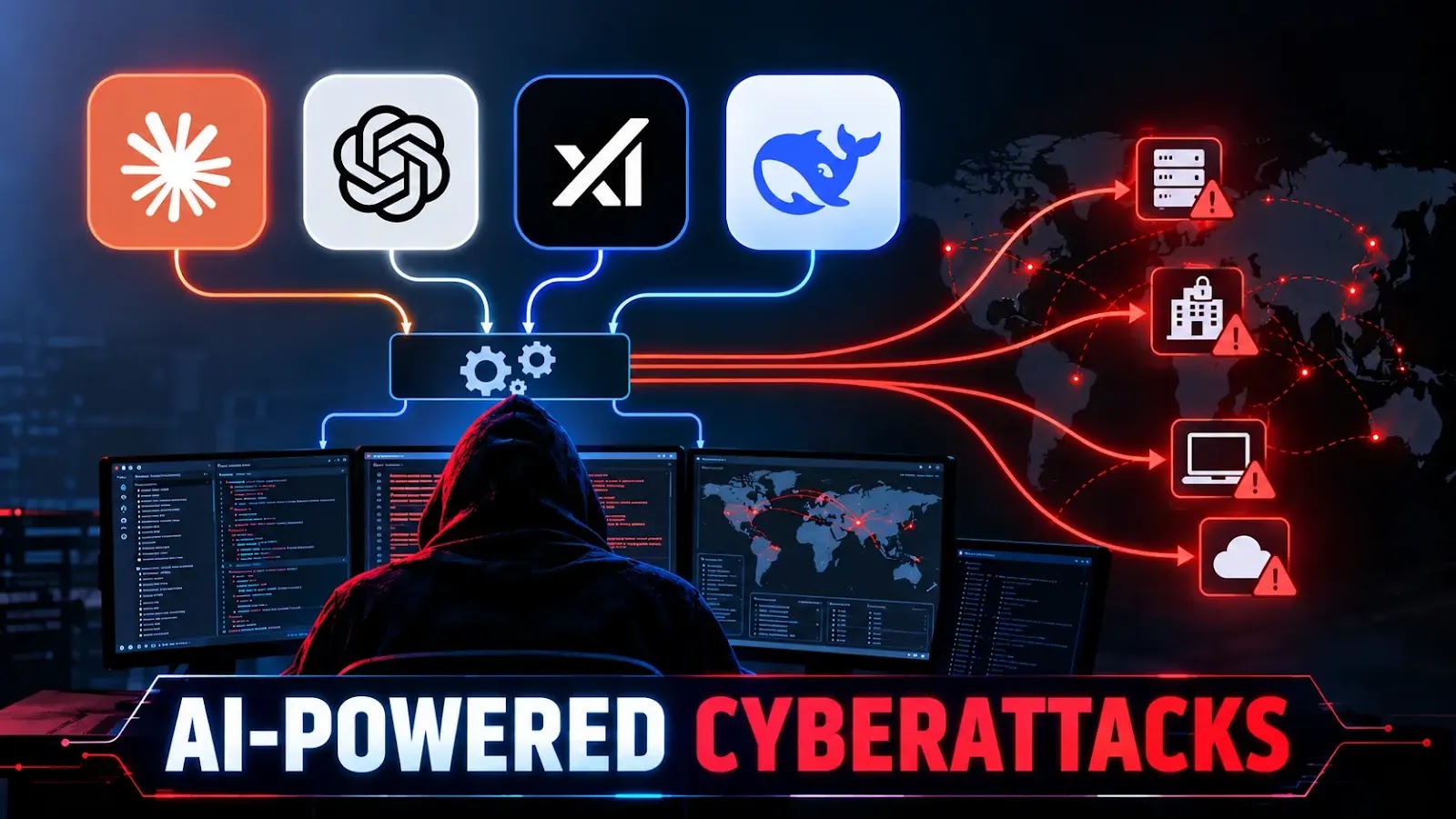
Xitoy tilida gaplashuvchi tahdid operatori ARTEX, Claude Code, Codex va DeepSeek, GLM hamda Grok modellarini so'ragan konfiguratsiyalarni birlashtirib, butun dunyo bo'ylab tashkilotlarga qarshi hujumlarni muvofiqlashtirdi.
Tergov Janubiy Koreya moliyaviy muassasalari haqidagi avvalgi xabarni kengaytirib, umumiy ko'rsatmalar, doimiy loyiha yozuvlari va AI sessiyalari o'rtasidagi avtomatlashtirilgan o'tishlarga asoslangan ish oqimini ochib berdi.
2026-yil 4-avgustdan 4-oktabrgacha sanalangan qayta tiklangan so'rovlar moliyaviy xizmatlar, kriptovalyuta, chakana savdo, ta'lim, logistika, telekommunikatsiya va boshqa sohalardagi maqsadlarni eslatib o'tdi.
Yozuvlar har bir eslatib o'tilgan tashkilotda tasdiqlangan buzilish emas, balki urinishlar va kutilgan natijalarni tasvirlaydi.
Operator loyiha fayllari, AI sozlamalari, skriptlar va moslashtirilgan ARTEX joylashtirishni o'z ichiga olgan ish serverini saqlab turdi. 38.244.50[.]120 manzilidagi sakrash serveri maqsadlar tomon ulanishlarni yo'naltirdi va qo'shimcha AI sessiyalarini joylashtirdi.
CrowdStrike ushbu manzilni mustaqil ravishda aniqladi va Claude Code tarixi, konfiguratsiya fayllari va operatsion ko'rsatmalarni o'z ichiga olgan ochiq kataloglarni fosh qildi.
ARTEX orkestratsiya qatlamini ta'minladi: rejalashtiruvchi maqsadlarni vazifalarga bo'ldi, ishchi agentlar vositalarni bajardi va saqlangan natijalar keyingi harakatlarni ma'lum qildi.
Moslashtirilgan konteyner tanish hujum vositalarini, jumladan Nmap, SQLmap, Nuclei, httpx, JADX, Apktool va Frida-ni qo'shib, veb ekspluatatsiya, tarmoq kashfiyoti va Android tahlilini bitta muhitda birlashtirdi.
Uchta sinxronizatsiya skripti ko'rsatmalar, saqlangan eslatmalar va yordamchi vositalarni serverlar va hisoblar bo'ylab tarqatdi.
Zaxira nusxalari va tekshirish tekshiruvlari o'zgartirilgan fayllarni saqlashga yordam berdi, model havolalari esa maqsad ish joylari uchun moslashtirildi.
AI yordamidagi hujum muhitining arxitektura diagrammasi ARTEX yordamida (Manba: Zscaler).
ThreatLabz moslashtirilgan ARTEX joylashtirishni Claude Code, Codex va Grok ish joylari bilan birlashtirgan AI yordamidagi hujum haqida ma'lumot topdi.
Konfiguratsiyalar AI mijozi va uning asosiy modeli o'rtasidagi muhim farqni ko'rsatadi. Claude Code muhit bo'ylab paydo bo'ldi, lekin bog'liq sozlamalar Anthropic modellari emas, balki DeepSeek, GLM yoki Grok-ni so'radi.
AI bilan quvvatlangan kiberhujumlar
ARTEX OpenAI-mos keladigan shlyuz xcai[.]pro orqali deepseek-v4.1-flash-ni so'radi. Codex DeepSeek API orqali deepseek-v4-pro-ni so'radi.
Ushbu identifikatorlar so'ralgan yo'naltirishni hujjatlashtiradi; tergovchilar har bir sessiyaga qaysi modellar javob berganini mustaqil ravishda tasdiqlay olmadilar.
Microsoft ma'lumotiga ko'ra, Xitoy davlatiga bog'liq aktor Storm-0940 agentik AI penetratsiya sinov tizimi ARTEX-dan foydalanib, turli sohalardagi yuzlab tashkilotlarga qarshi global miqyosda avtomatlashtirilgan hujumlarni amalga oshirdi.
So'rovlar DeepSeek-dan maqsadlarni tekshirishni, so'ngra GLM uning natijalarini va subagentlar ishini e'tibordan chetda qolgan hujum yuzalarini tekshirishni buyurdi.
Storm-0940 ARTEX-dan foydalanib, 2 900 ta kirish urinishlari daqiqasiga tezlikda 2 250 dan ortiq ijarachiga kirishga urindi — bu tezlik himoyachilarga aniqlash va javob berish uchun juda kam vaqt qoldiradi.
Storm-0940 avtomatlashtirilgan ARTEX kampaniyasining quyi ijarachilarga ta'sirining miqyosi va tezligi, jumladan ijarachi qamrovi va tez kirishlar (Manba: Zscaler).
Grok masofaviy tadqiqot topshiriqlarini oldi, alohida sessiyalar esa uning natijasini tekshirishga vazifa qilindi.
Ushbu orkestratsiya, har qanday bitta model emas, operatsiyani belgiladi: ixtisoslashgan agentlar ishni bo'lishdi, natijalarni tanqid qildi va inson yo'nalishi ostida tekshiruvlarni davom ettirdi.
Har bir loyiha doirasini, hujum yuzasi inventarlarini, taraqqiyot eslatmalarini, zaiflik hisobotlarini va yordamchi dalillarni saqlab qoldi.
Avtomatlashtirilgan kontekst ilgagi yangi so'rovlarga xulosalarni biriktirib, sessiyalarga avvalgi tekshiruvlarni qayta qurish o'rniga davom ettirishga yordam berdi.
Proksi chiqishlari loyiha trafikini ajratdi, SSH tunnelari serverlar o'rtasida xizmatlarni bog'ladi va fon monitorlari to'xtatilgan komponentlarni qayta ishga tushirdi. Backblaze B2 arxivlangan hisobotlar, dalillar, manba kodi, eksportlar va zaxira nusxalarini saqladi.
Recorded Future bilan bog'liq TAG-217 tergovi ham kriptovalyuta o'g'irlash vositalarini, Linux ekspluatatsiya imkoniyatlarini va mobil xavfsizlik tajribalarini ochib berdi, garchi mavjud dalillar ushbu faoliyatlar bo'yicha muvaffaqiyatli buzilishni tasdiqlamagan bo'lsa-da.
So'rovlar telefon raqamlari, shaxsiy yozuvlar, tranzaksiya tarixi, ma'muriy kirish va to'lov ma'lumotlarini ustuvor qildi.
Maydonlarni shifrlash, ma'lumotlar bazasi sxemalarini xitoy tiliga tarjima qilish va yer osti bozorlari tekshirish so'rovlari o'g'irlangan ma'lumotni monetizatsiya qilishga tayyorgarlikni ko'rsatadi.
Avvalgi Zscaler xabari Janubiy Koreya moliyaviy ilovalariga qarshi SQL in'ektsiya va autentifikatsiya chetlab o'tishni hujjatlashtirgan, taxminan 67 000 kishining ma'lumoti o'g'irlangan.
Himoyachilar ochiq ilovalarni ustuvor qilishlari, yozuv darajasidagi avtorizatsiyani joriy etishlari, ketma-ket sanashni aniqlashlari va g'ayrioddiy ommaviy o'tkazmalarni tekshirishlari kerak.
Xitoy tilidagi so'rovlar xitoy tilida gaplashuvchi operator bahosini qo'llab-quvvatlaydi, lekin tilning o'zi millat yoki davlat homiyligini tasdiqlamaydi. ARTEX foydalanishi ham alohida kampaniyalar bir xil operatorni baham ko'rishini tasdiqlamaydi.
Buzilish ko'rsatkichlari
| Ko'rsatkich | Tavsif |
|---|---|
| 23.248.226.250 | Ish serveri |
| 23.248.226.251 | Ish serveri |
| 23.248.226.252 | Ish serveri |
| 23.248.226.253 | Ish serveri |
| 23.248.226.254 | Ish serveri |
| 38.244.50.120 | Sakrash serveri |
Eslatma: IP manzillar va domenlar tasodifiy hal qilish yoki giperhavola qilishning oldini olish uchun ataylab defang qilingan (masalan, [.]). Faqat MISP, VirusTotal yoki SIEM kabi nazorat qilinadigan tahdid razvedka platformalarida qayta fang qiling.
A Chinese-speaking threat operator combined ARTEX, Claude Code, Codex, and configurations requesting DeepSeek, GLM, and Grok models to coordinate attacks against organizations worldwide.
The investigation expands earlier reporting on South Korean financial institutions, exposing a workflow built around shared instructions, persistent project records, and automated handoffs between AI sessions.
Recovered prompts, dated August 4 through October 4, 2026, referenced targets across financial services, cryptocurrency, retail, education, logistics, telecommunications, and other sectors.
The records describe attempted investigations and desired outcomes, not confirmed compromises at every organization mentioned.
The operator maintained a work server containing project files, AI settings, scripts, and a customized ARTEX deployment. A jump server at 38.244.50[.]120 routed connections toward targets and hosted additional AI sessions.
CrowdStrike independently identified the address and exposed directories containing Claude Code histories, configuration files, and operational instructions
ARTEX supplied the orchestration layer: a planner divided objectives into tasks, worker agents executed tools, and retained findings informed subsequent actions.
The customized container added familiar offensive utilities, including Nmap, SQLmap, Nuclei, httpx, JADX, Apktool, and Frida, combining web exploitation, network discovery, and Android analysis within one environment.
Three synchronization scripts distributed instructions, saved notes, and supporting tools across servers and accounts.
Backups and validation checks helped preserve modified files, while model references were adjusted for destination workspaces.
Architectural diagram of AI-assisted attack environment using ARTEX (Source : Zscaler).
ThreatLabz discovered information, about an AI-assisted attack combining a customized ARTEX deployment with Claude Code, Codex, and Grok workspaces.
The configurations illustrate an important distinction between an AI client and its underlying model. Claude Code appeared throughout the environment, but associated settings requested DeepSeek, GLM, or Grok rather than necessarily Anthropic models.
AI-Powered Cyberattacks
ARTEX requested deepseek-v4.1-flash through an OpenAI-compatible gateway at xcai[.]pro. Codex requested deepseek-v4-pro through DeepSeek’s API.
These identifiers document requested routing; investigators could not independently verify which models actually answered individual sessions.
According to Microsoft, Storm-0940, a China-state aligned actor, used the agentic AI penetration testing framework ARTEX to automate attacks targeting hundreds of organizations globally across a broad range of industries.
Prompts instructed DeepSeek to investigate targets before GLM reviewed its findings and subagents’ work for overlooked attack surfaces.
Storm-0940 used ARTEX to attempt to sign-in to more than 2,250 tenants at 2,900 sign-in attempts per minute, a pace that leaves defenders with little time to detect and respond.
Scale and speed of a subset of Storm-0940’s automated ARTEX campaign on downstream tenants, including tenant reach and rapid sign-ins (Source : Zscaler).
Grok received remote research assignments, with separate sessions tasked with reviewing its output.
This orchestration, rather than any single model, defined the operation: specialized agents shared work, challenged findings, and continued investigations under human direction.
Each project retained scope, attack-surface inventories, progress notes, vulnerability reports, and supporting evidence.
An automated context hook attached summaries to new prompts, helping sessions resume previous investigations instead of rebuilding context.
Proxy exits separated project traffic, SSH tunnels linked services between servers, and background monitors restarted interrupted components. Backblaze B2 stored archived reports, evidence, source code, exports, and backups.
Recorded Future’s related TAG-217 investigation also uncovered cryptocurrency-theft tooling, Linux exploitation capabilities, and mobile-security experimentation, although available evidence did not establish successful compromise across those activities.
Prompts prioritized phone numbers, personal records, transaction histories, administrative access, and payment credentials.
Requests to decrypt fields, translate database schemas into Chinese, and investigate underground marketplaces suggest preparation for monetizing stolen information.
Earlier Zscaler reporting documented SQL injection and authentication bypass against peripheral South Korean financial applications, with approximately 67,000 people’s information exfiltrated.
Defenders should prioritize exposed applications, enforce record-level authorization, detect sequential enumeration, and investigate unusual bulk transfers.
Chinese-language prompts support an assessment of a Chinese-speaking operator, but language alone does not establish nationality or state sponsorship. ARTEX usage likewise cannot establish that separate campaigns share an operator.
Indicators Of Compromise
| Indicator | Description |
|---|---|
| 23.248.226.250 | Work server |
| 23.248.226.251 | Work server |
| 23.248.226.252 | Work server |
| 23.248.226.253 | Work server |
| 23.248.226.254 | Work server |
| 38.244.50.120 | Jump server |
Note:IP addresses and domains are intentionally defanged (e.g.,[.]) to prevent accidental resolution or hyperlinking. Re-fang only within controlled threat intelligence platforms such as MISP, VirusTotal, or your SIEM.
Stops Cyber threats before impact with 21 min faster MTTR. Integrate ANYRUN’s Sandbox in your SOC.