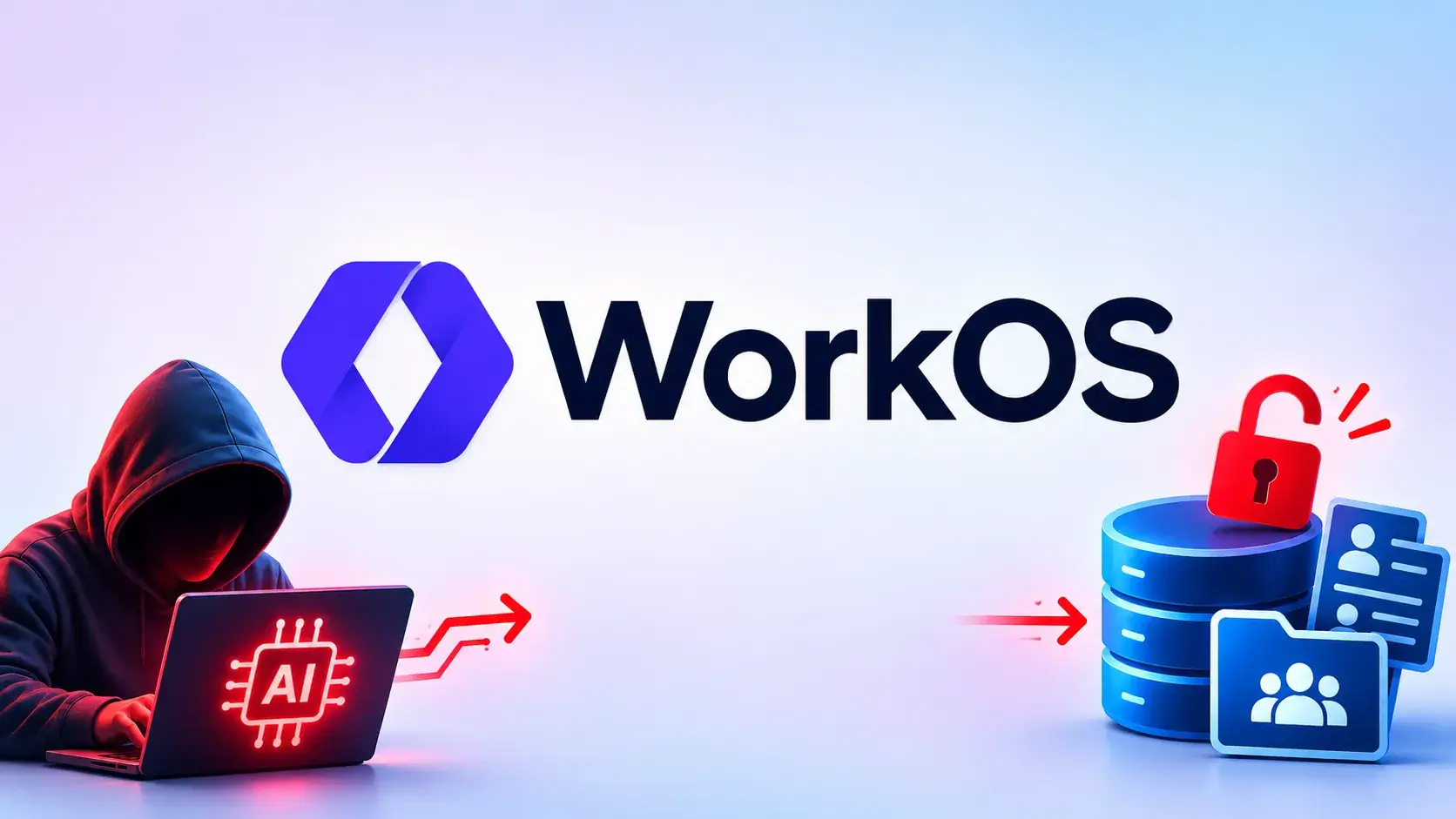
WorkOS 2026-yil 30-oktabrda ichki savdo ilovasiga ruxsatsiz kirish haqida xabar berdi. Tergov natijalariga ko'ra, hujumchilar razvedka va ekspluatatsiyani avtomatlashtirish uchun sun'iy intellekt yordamida ishlaydigan hujum xavfsizlik tizimidan foydalangan.
Kompaniyaning davom etayotgan tekshiruvi shuni ko'rsatadiki, hodisa mijozlar bilan munosabatlarni boshqarish (CRM) va mijozlarni qo'llab-quvvatlash ma'lumotlariga ta'sir qilgan. Biroq WorkOS tasdiqladiki, hujumchilar WorkOS ilovasidan hech qanday ma'lumotga kirganligi yoki ishlab chiqarish xizmatlariga ta'sir qilganligi haqida hech qanday dalil yo'q.
Bu farq muhim: e'lon qilingan ta'sir ichki biznes yozuvlari va mijozlar bilan o'zaro aloqalarga tegishli, ishlab chiqarish platformasining tasdiqlangan buzilishiga emas.
Mijoz Yozuvlari va Aloqalar Fosh Etildi
Ta'minlangan hodisa e'loniga ko'ra, ta'sirlangan ilova biznes aloqa ma'lumotlariga, jumladan ismlar, elektron pochta manzillari, telefon raqamlari, lavozim unvonlari va kompaniya a'zoliklariga kirish imkonini bergan.
Boshqa kirish mumkin bo'lgan ma'lumotlar mijoz hisoblari tarixi, savdo munosabatlari yozuvlari, shuningdek savdo qo'ng'iroqlari, qo'llab-quvvatlash muhokamalari va mijoz Slack suhbatlarining xulosalari yoki parchalarini o'z ichiga olgan.
Operatsion metama'lumotlar ham jalb qilingan, jumladan mijozlarning WorkOS mahsulotlaridan foydalanishi va mahsulot ulanishlari yoki kataloglarining sog'ligi haqida ma'lumot.
WorkOS alohida tashkilotlarga ta'sirni aniqlash uchun ta'sirlangan yozuvlarni ko'rib chiqmoqda. E'lon ta'sirlangan mijozlar sonini, dastlabki kirish mexanizmini yoki jalb qilingan aniq zaiflik yoki ma'lumotlarni aniqlamaydi.
Tergovchilar sun'iy intellekt yordamida ishlaydigan hujum tizimini aniqladilar, ammo WorkOS vositani nomlamadi yoki kirishni ma'lum bir tahdid aktoriga bog'lamadi.
Bu cheklov muhim, chunki agentik sun'iy intellekt hujum ish oqimlarining keng tarqalgan suiiste'moli alohida hodisalar bir xil operator yoki tizimni baham ko'rishini isbotlamaydi.
Google Threat Intelligence Group va Mandiantning tegishli tadqiqotida tergovchilar tizimlar maqsadlarni buyruqlarga aylantirish, ruxsatlarni tekshirish, xatolarni bartaraf etish va ketma-ket kirish bosqichlarini avtomatlashtirish uchun foydalanilishini hujjatlashtirdilar. Bu tizimlar yangi ekspluatatsiya usullarini kiritishdan ko'ra tanish usullarni tezlashtiradi.
ARTEX'ning muvofiqlashtirilgan hujum agentlari kabi vositalar bu modelni namoyish etadi, razvedka, bulut ruxsatlarini aniqlash, ma'lumotlarni o'g'irlash va imtiyozlarni oshirishni birlashtiradi. Biroq WorkOS e'loni ARTEX uning ilovasiga qarshi ishlatilganligini isbotlamaydi.
Davlat tizimlariga qarshi alohida ko'p agentli kirishlar agentlar razvedkani muvofiqlashtirishi va hujum yo'llarini qayta-qayta qayta baholashi mumkinligini ko'rsatadi. Bu natijalar kontekst beradi, bu hodisa uchun atributsiya emas.
WorkOS ta'sirlangan ilovaga tashqi kirishni o'chirdi va ichki vosita kirish nazoratlarini kengroq ko'rib chiqishni boshladi. Shuningdek, u faoliyat doirasini aniqlash va uning ta'sirini baholash uchun mustaqil raqamli sud-tibbiyot va hodisaga javob berish firmasini jalb qildi.
Kompaniya fosh etilgan aloqa ma'lumotlari va suhbat tafsilotlari firibgar so'rovlarni haqiqiy ko'rinishiga olib kelishi mumkinligi haqida ogohlantirdi.
Mijozlar hatto xabarlar haqiqiy hamkasblar yoki qo'llab-quvvatlash muhokamalariga murojaat qilsa ham, noxush so'rovlarni mustaqil ravishda tekshirishlari, sezgir ma'lumotlarni ulashishdan yoki harakat qilishdan oldin tasdiqlashlari kerak.
WorkOS ta'sirlangan mijozlar bilan bevosita bog'lanishini va tergovchilar qo'shimcha natijalarni tasdiqlagan sari keyingi yangilanishlarni e'lon qilishini aytdi.
SOC'ingizga hodisalarni tez to'xtatish uchun ogohlantirish kontekstini bering. 16K SOC'dan tahdid razvedkasini integratsiya qiling.
WorkOS reported unauthorized access to an internal sales application on October 30, 2026. The investigation found that attackers used an AI-assisted offensive security framework to automate reconnaissance and exploitation.
The company’s ongoing inquiry suggests that the incident affected customer relationship management (CRM) and customer support information. However, WorkOS confirmed that there is no evidence showing that the attackers accessed any data from the WorkOS application or impacted production services.
This distinction matters: the disclosed exposure relates to internal business records and customer interactions, not a confirmed breach of the production platform.
Customer Records and Communications Exposed
According to the supplied incident disclosure,the affected application provided access to business contact details, including names, email addresses, telephone numbers, job titles, and company affiliations.
Other accessible information included customer account histories, sales relationship records, and summaries or excerpts from sales calls, support discussions, and customer Slack conversations.
Operational metadata was also involved, including information about customers’ use of WorkOS products and the health of product connections or directories.
WorkOS is reviewing affected records to establish the impact on individual organizations. The disclosure does not identify the number of affected customers, the initial access mechanism, or the specific vulnerability or credentials involved.
Investigators identified an AI-assisted offensive framework, but WorkOS did not name the tool or attribute the intrusion to a particular threat actor.
That limitation matters because widespread abuse of agentic AI attack workflows does not establish that separate incidents share an operator or framework.
In related research from Google Threat Intelligence Group and Mandiant, investigators documented attackers using frameworks to translate objectives into commands, test permissions, troubleshoot errors, and automate successive intrusion stages. These systems accelerate familiar techniques rather than necessarily introducing new exploitation methods.
Tools such as ARTEX’s coordinated offensive agents illustrate this model, combining reconnaissance, cloud permission discovery, credential harvesting, and privilege escalation. However, the WorkOS disclosure does not establish that ARTEX was used against its application.
Separate multi-agent intrusions against government systems demonstrate how agents can coordinate reconnaissance and repeatedly reassess attack paths. Those findings provide context, not attribution for this incident.
WorkOS disabled external access to the affected application and began a broader review of internal tool access controls. It also retained an independent digital forensics and incident response firm to establish the activity’s scope and assess its impact.
The company warned that exposed contact information and conversation details could make fraudulent requests appear legitimate.
Customers should independently verify unexpected requests before sharing sensitive information or taking action, even when messages reference genuine colleagues or support discussions.
WorkOS said it will contact affected customers directly and publish further updates as investigators verify additional findings.
Give your SOC the alert context to stops incidents quickly.Integrate Threat Intel from 16K SOCs.