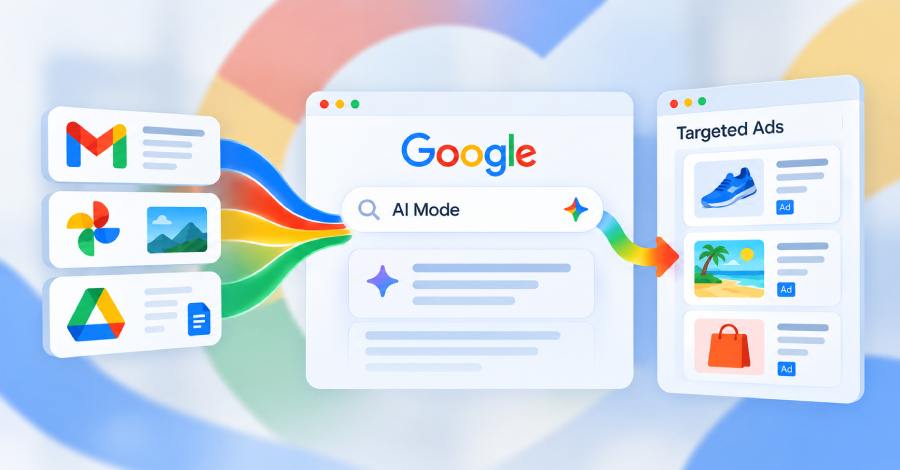
Google shaxsiylashtirilgan sun'iy intellekt (AI) funksiyalarini Search yoki Gemini'da ishlatish kompaniyaga foydalanuvchilarga boshqa ulangan Google xizmatlaridagi faoliyatiga asoslangan maqsadli reklamalarni ko'rsatish imkonini berishi mumkinligini aniq ko'rsatish uchun maxfiylik siyosatini yangilagan.
"Siz ba'zi Google xizmatlariga, jumladan Search yoki Gemini Apps kabi xizmatlarga, siz foydalanadigan boshqa Google xizmatlaridan, masalan Google Photos va Gmail va Drive kabi Workspace ilovalaridan ma'lumotlarga kirish huquqini berishni tanlashingiz mumkin, bu sizga kirish xizmatining siyosatlari va sozlamalariga muvofiq shaxsiylashtirilgan tajriba taqdim etish uchun," deb yozilgan 2026-yil 16-oktabrdan kuchga kiradigan siyosat yangilanishida.
"Masalan, Search sizga shaxsiylashtirilgan kontent, jumladan reklamalarni taqdim etish uchun siz Search'ga kirish huquqini bergan ba'zi ma'lumotlarni qayta ishlashi mumkin."
Google shuningdek, qayta ko'rib chiqilgan siyosatida "Biz sizning Drive, Gmail yoki Google Photos'dagi kontentingiz asosida shaxsiylashtirilgan reklamalarni ko'rsatmaymiz, agar siz ushbu xizmatlardan ma'lumotlarni shaxsiylashtirilgan reklamalarni qo'llab-quvvatlaydigan boshqa Google xizmatlari uchun foydalanishga tanlamagan bo'lsangiz," deb ta'kidlaydi.
Siyosat yangilanishi haqidagi xabar birinchi bo'lib Android Authority tomonidan e'lon qilingan.
Yanvar 2026-yilda Gemini'da taqdim etilgan Personal Intelligence foydalanuvchilarga Gmail, Google Photos va YouTube kabi boshqa xizmatlarni ulash imkonini beradi, bu esa ularning chat tarixi afzalliklari bilan birgalikda moslashtirilgan javoblar berish usuli sifatida ishlaydi.
Bu funksiya hozirda 18 yoshdan katta foydalanuvchilar uchun global miqyosda beta sifatida tarqatilmoqda, faqat Yevropa Iqtisodiy Hududi, Shveytsariya, Buyuk Britaniya va Nigeriya bundan mustasno.
Siyosatda aytilishicha, Gmail, Drive yoki Photos'dagi kontentdan reklama shaxsiylashtirish uchun sukut bo'yicha foydalanilmaydi. Biroq, agar foydalanuvchilar Personal Intelligence funksiyasi orqali AI Mode va boshqa Search vositalari bilan fotosuratlar yoki elektron xatlarni ulashishni tanlasalar, bu o'zgaradi.
Boshqacha aytganda, agar foydalanuvchilar Personal Intelligence yoqilgan holda AI Mode yoki Gemini bilan o'zaro aloqada bo'lsalar, ushbu javoblarni shakllantiradigan ma'lumotlar (ya'ni Gmail yoki Photos'dagi kontent) maqsadli reklamalarni ko'rsatish uchun signal sifatida ishlatilishi mumkin. Maxfiylik siyosati shaxsiy ma'lumotlarni AI vositalariga kiritish reklama shaxsiylashtirishga hissa qo'shishi mumkinligini aniq ko'rsatishni maqsad qiladi.
Foydalanuvchilar AI funksiyalarini yoqish uchun ilovalarini ulashda maxfiylik savdo-sotiqini yodda tutishlari kerak. Chiqib ketishni afzal ko'rganlar Personal Intelligence'dan uzmoqchi bo'lgan ilovalarni tanlash yoki Search Services Personalization sozlamalari ("www.google[.]com/search-personalization") orqali Shaxsiylashtirilgan Tavsiyalarni butunlay o'chirish orqali buni amalga oshirishlari mumkin.
2026-yil yanvarida OpenAI AQShdagi ro'yxatdan o'tgan kattalar foydalanuvchilari uchun bepul va ChatGPT Go darajalarida reklamalarni ko'rsata boshladi, shu bilan birga foydalanuvchilarning ma'lumotlari va suhbatlari himoyalangan va hech qachon reklama beruvchilarga sotilmasligini ta'kidladi. Shuningdek, reklamalar chatbot javoblariga ta'sir qilmasligi va foydalanuvchilar tajribani nazorat qilishlari mumkinligini aytdi.
Shu hafta boshida AI kompaniyasi ChatGPT'dagi reklamani yana 26 ta davlatga kengaytirganini aytdi, bu umumiy sonni 89 taga yetkazdi. Bunga 14 ta yangi Lotin Amerikasi davlati va Yevropa, Afrika va Osiyodagi bir nechta bozorlar kiradi.
"Biz suhbatlarni reklama beruvchilardan maxfiy saqlaymiz va mijoz ma'lumotlarini sotmaymiz," deb ta'kidladi OpenAI. "ChatGPT'dagi reklamalar aniq belgilangan va ChatGPT javoblaridan ajratilgan, va reklama ChatGPT taqdim etadigan javoblarga ta'sir qilmaydi."
Google has updated its privacy policy to spell out that using personalized artificial intelligence (AI) features in Search or Gemini could allow the company to serve targeted ads to users based on their activity on other connected Google services.
"You may choose to allow certain Google services, including services like Search or Gemini Apps, to access data from other Google services you use, such as Google Photos and Workspace apps like Gmail and Drive, in order to provide you with a more personalized experience, subject to the policies and settings of the accessing service," reads a policy update effective October 16, 2026.
"For example, Search may process some of the data that you allow Search to access to personalize content, including ads."
Google also notes in its revised policy that "We don't show you personalized ads based on your content from Drive, Gmail, or Google Photos, unless you choose to make data from these services available to other Google services that support personalized ads."
News of the policy update was first reported by Android Authority.
Personal Intelligence, unveiled by Google in Gemini in January 2026, allows users to connect other services like Gmail, Google Photos, and YouTube as a way to provide tailored answers in combination with their chat history preferences.
The feature is currently rolling out as a beta to eligible users over the age of 18 globally, except in the European Economic Area, Switzerland, the U.K., and Nigeria.
It's worth noting that the policy states it doesn't use content from Gmail, Drive, or Photos to personalize ads by default. However, that changes should users opt to share photos or emails with AI Mode and other Search tools via the Personal Intelligence feature.
In other words, if users interact with AI Mode or Gemini while Personal Intelligence is enabled, the data that informs those answers (i.e., content from Gmail or Photos) could be used as a signal to serve targeted ads. The privacy policy aims to make it clear that feeding personal data into its AI tools could contribute to ad personalization.
Users should be mindful of the privacy trade-off when connecting their apps to enable AI features. Those who prefer to opt out can do so by selecting the apps they want to disconnect from Personal Intelligence or disable Personalized Recommendations entirely via the Search Services Personalization settings ("www.google[.]com/search-personalization").
In January 2026, OpenAI began showing ads to logged-in adult U.S. users in both the free and ChatGPT Go tiers, while emphasizing that users' data and conversations are protected and never sold to advertisers. It has also said the ads do not influence responses from the chatbot, and that users are in control of the experience.
Earlier this week, the AI company said it's expanded advertising on ChatGPT to 26 more countries, bringing the total to 89. This includes 14 more Latin American countries and several markets across Europe, Africa, and Asia.
"We keep conversations private from advertisers and do not sell customer data," OpenAI stressed. "Ads in ChatGPT are clearly labeled and separate from ChatGPT's answers, and advertising does not influence the answers ChatGPT provides."
Found this article interesting? Follow us on Google News, Twitter and LinkedIn to read more exclusive content we post.