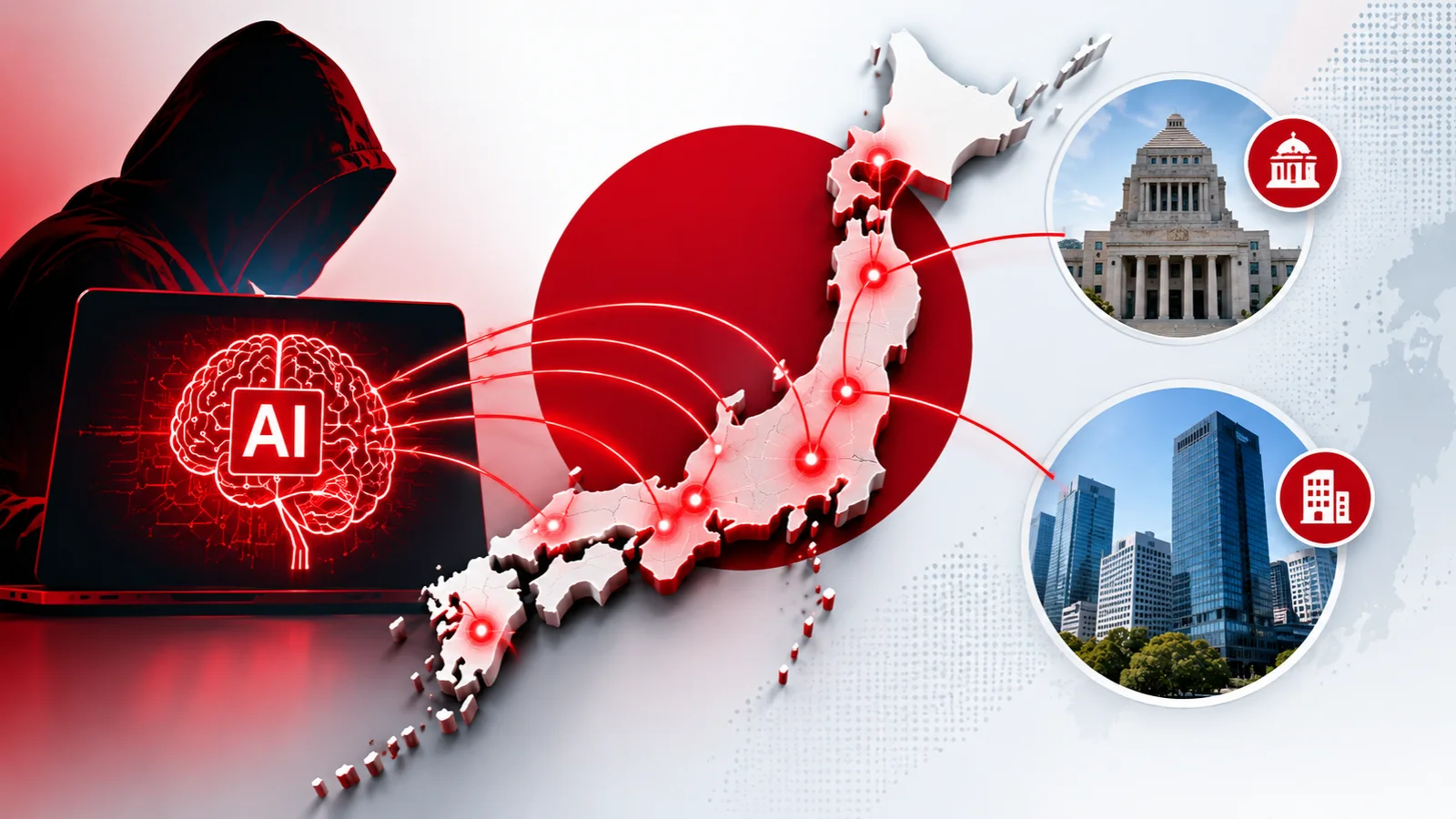
Yaponiya korporativ va davlat sektori mudofaasidagi zaifliklarni fosh etgan AI yordamidagi hujumlar to'lqiniga duch kelmoqda. Brokerlikdan tortib yetkazib berish firmalarigacha o'nlab hodisalar ma'lumotlar sizib chiqishini odatiy holga aylantirdi.
Yaponiya AI kiberhujumlari
Bloomberg tomonidan 28-oktabrda e'lon qilingan xabarga ko'ra, Yaponiya Iqtisodiyot, Savdo va Sanoat vazirligi (METI) Elektr va gaz savdosi nazorati komissiyasi veb-saytiga ruxsatsiz kirish sodir bo'lganini ma'lum qildi.
Bir necha kun oldin xakerlar GMO Internet Group valyuta savdo platformasidan mijozlarning maxfiy ma'lumotlarini e'lon qilganini da'vo qilishdi.
GMO shuningdek, avval xabar qilinganidek, taxminan 8 milliard yen (taxminan 50 million dollar) miqdorida tovlamachilik talabini oldi. Kompaniya 27-oktabr holatiga ko'ra hech qanday ransomware hujumi tasdiqlanmaganini aytdi.
Boshqa hodisalar orasida Milliy politsiya agentligi Arcadia bulut provayderi orqali 20 prefektura politsiya kuchlaridagi taxminan 125 000 ofitser va xodim ma'lumotlari fosh bo'lishi mumkinligini xabar qildi.
Shuningdek, Sony Network Communications 2 585 481 mijoz yozuvi fosh bo'lganini ma'lum qildi, SoftBankga tegishli IDC Frontier esa 8-oktabrda ransomware hujumiga uchradi va 495 mijoz tashkilotini to'xtatdi.
Mutaxassislar AI agentlari va ochiq manbali xakerlik vositalari jinoiy guruhlarga eskirgan infratuzilmani ekspluatatsiya qilishni va yapon til to'sig'ini yengishni osonlashtirayotganini aytishmoqda.
Hujumchilar tarmoqlarni tahlil qilish, zaif nishonlarni topish va aniqlashdan qochish uchun AI dan foydalanishadi. Ular shuningdek, zaifliklarni avtomatik skanerlash va fishing kampaniyalarini yozish uchun ham undan foydalanishadi.
GMO Cybersecurity by Ierae Xitoyda ishlab chiqilgan ARTEX nomli sinov vositasini so'nggi hujumlar bilan bog'ladi. Hujumchilarning fosh bo'lgan infratuzilmasi bo'yicha alohida tadqiqot ochiq manbali AI-agent platformasi CyberStrikeAI dan suiiste'mol qilinganini aniqladi.
Shuningdek, u yapon firmalariga AI yordamidagi hujumlar tahlilida yoritilganidek, rejalashtirish va vosita ishlab chiqish uchun AI dan foydalanilgan inson boshqaruvidagi hujumlarni ham aniqladi.
Yaqinda e'lon qilingan muhim PHP zaifliklari millionlab xakerlik urinishlarini keltirib chiqardi va Yaponiya hamda Yevropadagi hukumat va kompaniya saytlarini ishdan chiqardi.
TrendAI 20-oktabrgacha bo'lgan bir yilda 723 ta hodisani sanadi, bu 2024 va 2025 yillardagi to'liq yillik jami ko'rsatkichlardan ko'p.
Bosh kotib Minoru Kihara aprel oyidan beri taxminan 260 million kishining shaxsiy ma'lumotlari buzilganini aytdi. Xabar qilingan sizib chiqish holatlari sentyabrda 303 tadan oktyabrda 830 taga ko'tarildi.
Macnica veb-sayt va ilovalardagi shubhali buzilishlar yilning birinchi yarmida oylik o'rtacha oltitadan iyuldan beri oyiga 23 taga ko'tarilganini xabar qildi. Zaif IT xavfsizligiga ega kichik, naqd pulga boy firmalar ayniqsa jozibali nishonlar bo'lib qolmoqda.
Bosh vazir Sanae Takaichi shoshilinch kiberxavfsizlik paketini va'da qildi. METI shuningdek, noyabr oyidan boshlab Axborot texnologiyalarini rag'batlantirish agentligi (IPA) ichida AI yordamidagi "oq shlyapa" jamoasini tashkil etishni rejalashtirmoqda, bu jamoa simulyatsiya qilingan hujumlarni o'tkazadi va zaifliklarni topadi. Yaponiya 1-oktabrda Faol kiber mudofaa tizimini ishga tushirdi.
Mudofaa qiluvchilar PHP va boshqa internetga ulangan dasturiy ta'minotni darhol yangilashlari va fosh bo'lgan kirish nuqtalari uchun jamoat veb-saytlari va ilovalarini tekshirishlari kerak.
Tashkilotlar shuningdek, bulut va ish stoli xizmatlarini mustahkamlashlari, ko'p omilli autentifikatsiyani joriy etishlari va AI yordamidagi skanerlash va ommaviy hisob ma'lumotlarini sinash uchun muhitni kuzatishlari kerak.
Nihoyat, korxonalar hodisalar sodir bo'lganda buzilishlarni minimallashtirish uchun mustahkam hodisaga javob berish va buzilish haqida xabar berish rejalarini tayyorlashlari kerak.
Japan is dealing with an intense wave of AI-assisted intrusions that has exposed weaknesses in its corporate and public-sector defenses. Dozens of incidents, from brokerages to delivery firms, have made data leaks routine.
Japan AI cyberattacks
According to reporting published by Bloomberg, on October 28, Japan’s Ministry of Economy, Trade and Industry (METI) disclosed unauthorized access to the website of the Electricity and Gas Transaction Surveillance Commission.
Days earlier, hackers claimed to have published sensitive customer data from GMO Internet Group’s currency trading platform.
GMO also received an extortion demand of roughly ¥8 billion (about $50 million), as previously reported. The company said no ransomware attack had been confirmed as of October 27.
Other incidents include the National Police Agency reporting that data on about 125,000 officers and staff across 20 prefectural forces may be exposed through cloud provider Arcadia.
In addition, Sony Network Communications disclosed 2,585,481 exposed customer records, while ransomware hit SoftBank-owned IDC Frontier on October 8 and disrupted 495 client organizations.
Experts say AI agents and open-source hacking tools make it easier for criminal groups to exploit outdated infrastructure and get past the Japanese language barrier.
Attackers use AI to analyze networks, find vulnerable targets and evade detection. They also use it to automate vulnerability scanning and write phishing campaigns.
GMO Cybersecurity by Ierae has linked a China-developed testing tool called ARTEX to several recent attacks. Separate research on exposed attacker infrastructure found abuse of the open-source AI-agent platform CyberStrikeAI.
It also found human-directed intrusions that used AI for planning and tool development, as covered in this analysis of AI-powered attacks on Japanese firms.
Critical PHP vulnerabilities disclosed recently triggered millions of hacking attempts and took government and company sites offline in Japan and Europe.
TrendAI counted 723 incidents in the year to October 20, more than the full-year totals for 2024 and 2025.
Chief Cabinet Secretary Minoru Kihara said personal data on about 260 million people has been compromised since April. Reported leak cases jumped from 303 in September to 830 in October.
Macnica reports that suspected website and app breaches rose from a monthly average of six in the first half of the year to 23 per month since July. Small, cash-rich firms with weak IT security remain especially attractive targets.
Prime Minister Sanae Takaichi has promised an emergency cybersecurity package. METI also plans an AI-driven “white hat” team inside the Information-technology Promotion Agency (IPA), starting in November, to run simulated attacks and find weaknesses. Japan activated its Active Cyber Defence framework on October 1.
Defenders should patch PHP and other internet-facing software immediately and audit public websites and apps for exposed entry points.
Organizations must also harden cloud and desktop services, enforce multi-factor authentication, and monitor environments for AI-driven scanning and mass credential testing.
Finally, enterprises should prepare robust incident response and breach-notification plans to minimize disruption when incidents occur.