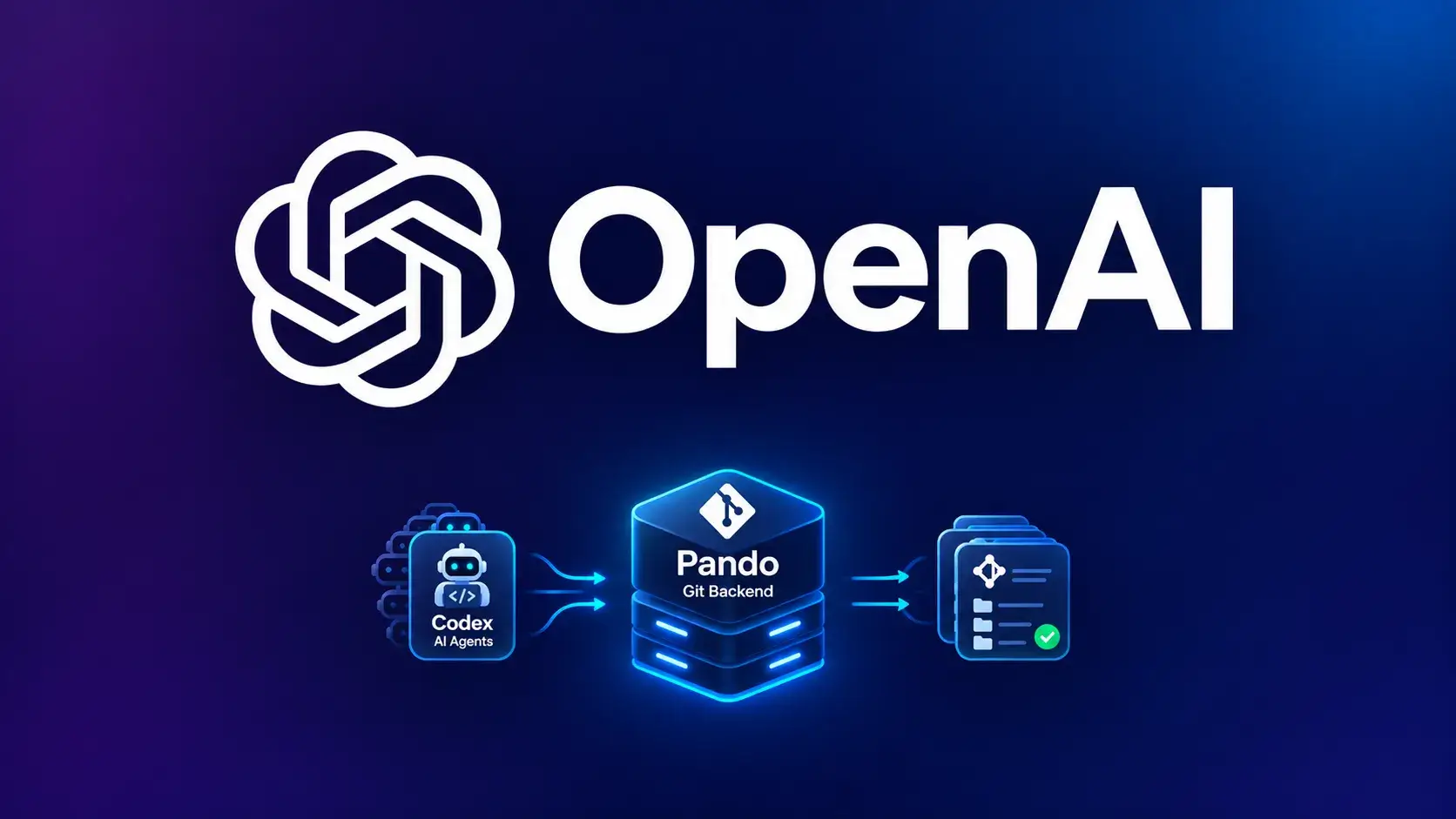
OpenAI Codex tomonidan boshqariladigan ishlab chiqish tizimlari ichki monorepo ortidagi tizimlarni bosib ketgach, yangi Git backend — Pando’ni yaratdi. OpenAI’ning 2026-yil 2-noyabrda e’lon qilingan muhandislik postida aytilishicha, Pando endi barcha monorepo ishlab chiqishni quvvatlaydi. U median push kechikishini deyarli 5 baravar qisqartirdi va kuniga deyarli bir petabayt Git ma’lumotlarini yetkazib beradi.
Codex muhandislarga ancha ko‘proq ishni parallel ravishda bajarish imkonini beradi, bu esa ko‘proq branch, push, merge, fetch va clone operatsiyalarini — ishlab chiqish muhitlari, tadqiqot ishlari va CI’dan — keltirib chiqaradi. OpenAI aytishicha, monoreponi qo‘llab-quvvatlovchi tizimlar o‘tgan yil oxirida qiyinchiliklarga duch kela boshlagan. Fetch va push operatsiyalari sekinlashgan, merge ishonchliligi esa ba’zan 90% dan pastga tushgan.
OpenAI xulosa qilishicha, cheklov Git’ning o‘zida emas, balki monorepoga xizmat ko‘rsatish usulida yotadi, shuning uchun Git protokoli va klienti saqlab qolindi. Xuddi shu bosim ishlab chiquvchilar xavfsizligini ham o‘zgartirmoqda. Agentlar tomonidan boshqariladigan ish oqimlari allaqachon AI kodlash agentlariga ta’sir qiluvchi GitSpawn zaiflik sinfi kabi kamchiliklarni fosh etgan.
Pando qanday ishlaydi
OpenAI ikkita keng tarqalgan masshtablash modelini baholadi: uch fazali commit replikatsiyasi va blob saqlashda oldindan yozish jurnali. Ikkalasi ham bir-biriga bog‘liq bo‘lmagan branchlarga push operatsiyalarini bitta muvofiqlashtirish nuqtasida to‘qnashishga majbur qiladi.
Pando boshqa yo‘lni tanlaydi:
• Har bir branch bo‘yicha yangilanishlar: U har bir push qilingan packfile’ni o‘zgarmas blob sifatida saqlaydi va “ref version”ni metadata do‘konida qayd etadi. Mijozlar faqat bir xil ref’ga push qilganda to‘qnashadi. • Kausal izchillik: Pando butun repozitoriya bo‘yicha bir vaqtdagi nuqta ko‘rinishini rad etadi. Bir nechta branchni ko‘rayotgan o‘quvchi ularni turli versiyalarda ko‘rishi mumkin. • Packfile qayta ishlatilishi: Server har bir mijoz uchun noyob pack qurish o‘rniga saqlangan pack’larni yetkazib beradi. U packfile URI’larini qaytaradi, Express deb nomlangan keshlash xizmati esa fayllarni yetkazadi. • Cheklangan ref e’loni: Odatiy holatda, Pando feature-branch push’larida faqat belgilangan trunk branchni e’lon qiladi. Bu e’lonlarni kichik saqlaydi, chunki millionlab branchlar bilan ular 100 MiB dan oshishi mumkin. Monorepodagi median pack 20 KiB dan kichik edi. • Kompaktlash: Fon ishchilari kichik “L0” pack’larni kattaroq qoplamalarga birlashtiradi, bugungi kunda L4 gacha. Bu Pando’ga pack’larni logarifmik vaqtda tanlash imkonini beradi.
OpenAI xabar berishicha, Pando bir soat ichida 57 TB dan ortiq Git pack’larini yetkazib bergan, bu ma’lumotlarning 99% dan ortig‘i mahalliy disk keshi orqali kelgan. Express’dagi keshlash tezligi 99% dan oshgan, clone va fetch operatsiyalari esa standart bulut virtual mashinalarida 10 Gbps ulanishlarni to‘liq ishlatgan. O‘tishdan so‘ng, post-merge ishonchliligi 99,99% ga yetgan, median push kechikishi esa deyarli 80% ga kamaygan.
OpenAI aytishicha, Codex Pando’ni g‘oyadan ishlab chiqarishgacha atigi 10 hafta ichida ishlab chiqishda yordam bergan. Bitta muhandis asosiy tizimni loyihalashtirgan, agentlar jamoalari esa uni amalga oshirgan, bu esa aprel oyida ishlab chiqarish trafikiga xizmat ko‘rsatishni boshlashga imkon bergan. Rust kod bazasi muvofiqlik test to‘plami va deterministik simulyatsiya sinovlari yordamida tasdiqlangan. Agentlar shuningdek, xatolarni aniqlash uchun Lean va TLA+ spetsifikatsiyalarini ham yaratgan.
OpenAI Pando’ni eski tizimga o‘qish va yozish orqali proksi sifatida ishlatgan, bu esa trafikni uzilishsiz ravishda o‘tishini ta’minlagan. Codex shuningdek, ishlab chiquvchilarga o‘z muhitlarini ko‘chirishda ham yordam bergan.
Agent miqyosidagi infratuzilma manba nazorati atrofidagi hujum yuzasini kengaytiradi. Tadqiqotchilar allaqachon Git hook’lari AI agent harakatlarini kod bajarilishiga aylantirishi mumkinligini ko‘rsatgan.
Aokigahara kabi infostealer’lar endi Codex va boshqa AI kodlash vositalari ma’lumotlarini, jumladan Git credential fayllari va SSH kalitlarini nishonga olmoqda.
OpenAI aytishicha, u Pando’ga o‘zining xavfsiz dasturiy ta’minot asoslari tamoyillarini qo‘llagan va Git hamda Pando’ni doimiy ravishda red-team qilish uchun agentlarni ishlatadi. Pando standart Git klientini saqlab qolganligi sababli, imzolangan commit’lar va branch himoyalari kabi mavjud nazoratlar hali ham amal qiladi.
OpenAI aytishicha, u yuqori Git’ga tuzatishlar kiritgan. Ular parallel pack yuklab olishlari, uzilgan o‘tkazmalaridan keyin tozalash va qayta boshlanadigan yuklab olishlarni qamrab oladi. Shuningdek, packfile-uri yuklab olishlari uchun tracing va “explicit haves” tushunchasi qo‘shilgan, bu esa mijozlarga trunk-only pack’lar bilan –force-with-lease ishlatish imkonini beradi. Bir nechta o‘zgarishlar allaqachon yuqori oqimda, qolganlari esa OpenAI’ning ommaviy Git fork’ida.
OpenAI Pando uchun boshqa foydalanish usullarini, jumladan ko‘plab agentlar bitta umumiy repozitoriyada hamkorlik qiladigan ish yuklarini o‘rganmoqda. Shuningdek, texnologiyani foydalanuvchilar bilan baham ko‘rish yo‘llarini ham ko‘rib chiqmoqda.
SOC’ga tezda hodisalarni to‘xtatish uchun ogohlantirish kontekstini bering. 16K SOC’dan Threat Intel’ni integratsiya qiling.
OpenAI has built a new Git backend called Pando after Codex-driven development overwhelmed the systems behind its internal monorepo. OpenAI’s engineering post, published November 2, 2026, says Pando now powers all monorepo development. It cut median push latency by nearly 5x and delivers nearly a petabyte of Git data per day.
Codex lets engineers run far more work in parallel, which means more branches, pushes, merges, fetches, and clones from development environments, research jobs, and CI. OpenAI says the systems supporting its monorepo began struggling around the end of last year. Fetches and pushes were slow, and merge reliability at times fell below 90%.
OpenAI concluded the limit lay in how it served the monorepo, not in Git itself, so it kept the Git protocol and client. The same pressure is reshaping developer security. Agent-driven workflows have already exposed flaws such as the GitSpawn vulnerability class affecting AI coding agents.
How Pando Works
OpenAI evaluated two common scaling patterns, three-phase commit replication and a write-ahead log in blob storage. Both force pushes to unrelated branches to contend on one coordination point.
Pando takes a different route:
- Per-branch updates: It stores each pushed packfile as an immutable blob and records a “ref version” in a metadata store. Clients conflict only when pushing to the same ref.
- Causal consistency: Pando gives up repository-wide point-in-time snapshots. A reader looking at several branches may see them at different versions.
- Packfile reuse: The server serves stored packs instead of building a unique pack per client. It returns packfile URIs, and a caching service called Express delivers the files.
- Limited ref advertisement: By default, Pando advertises only a designated trunk branch on feature-branch pushes. This keeps advertisements small, because with millions of branches they can exceed 100 MiB. The median pack in the monorepo was under 20 KiB.
- Compaction: Background workers merge small “L0” packs into larger covers, up to L4 today. This lets Pando select packs in logarithmic time.
OpenAI reports that Pando served over 57 TB of Git packs in a single hour, with more than 99% of this data coming from the local disk cache. The cache hit rates on Express exceeded 99%, and clone and fetch operations fully utilized 10 Gbps links on standard cloud virtual machines. After the cutover, post-merge reliability reached 99.99%, and median push latency decreased by nearly 80%.
OpenAI states that Codex helped develop Pando from inception to production in just 10 weeks. One engineer designed the core system, while teams of agents implemented it, allowing it to begin serving production traffic in April. The Rust codebase was validated using a conformance test suite and deterministic simulation testing. Agents also created Lean and TLA+ specifications to identify bugs.
OpenAI operated Pando as a read- and write-through proxy to the old system, ensuring that traffic transitioned smoothly without downtime. Codex also helped developers migrate their own environments.
Agent-scale infrastructure widens the attack surface around source control. Researchers have already shown how Git hooks can turn AI agent actions into code execution.
Infostealers such as Aokigahara now target Codex and other AI coding tool credentials, including Git credential files and SSH keys.
OpenAI says it applied its secure software foundation principles to Pando and runs agents around the clock to red-team Git and Pando. Because Pando keeps the standard Git client, existing controls such as signed commits and branch protections still apply.
OpenAI says it has contributed fixes to upstream Git. They cover concurrent pack downloads, cleanup after interrupted transfers and resumed downloads. It also added tracing for packfile-uri downloads and an “explicit haves” concept that lets clients use –force-with-lease against trunk-only packs. Several changes are already upstream, and the rest are in OpenAI’s public Git fork.
OpenAI is exploring other uses for Pando, including workloads where many agents collaborate on one shared repository. It is also looking at ways to share the technology with users.
Give your SOC the alert context to stops incidents quickly.Integrate Threat Intel from 16K SOCs.