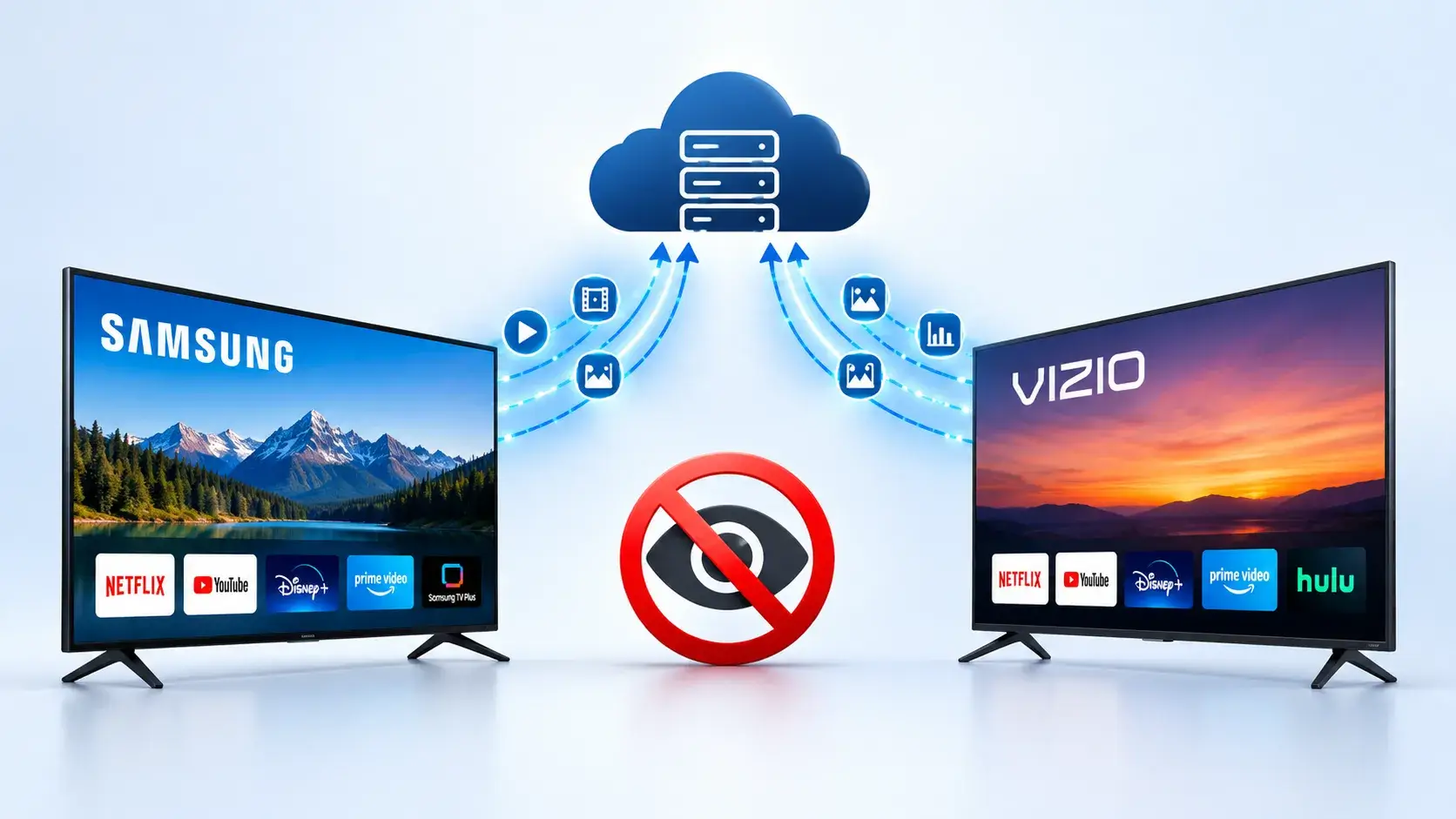
Samsung va Vizio smart televizorlari tadqiqotchilar avtomatik kontentni tanish (ACR) funksiyasini o'chirib qo'yganidan keyin ham ACR bilan mos keladigan trafikni yuborishda davom etgan.
Bu ko'rishni kuzatishning oldini olishda maxfiylik nazoratlarining ishonchliligi haqida xavotirlar uyg'otadi. Biroq, shifrlangan ulanishlar tadqiqotchilarga ushbu uzatmalar ko'rish ma'lumotlarini o'z ichiga olganini yoki ishlab chiqaruvchilar ularni saqlab qolganini tasdiqlashga imkon bermadi.
"Kuzatuvchilarni Kuzatish: AQSh Smart TV Avtomatik Kontentni Tanishning Maxfiylik Tahlili" deb nomlangan tadqiqot 10 ta ishlab chiqaruvchining 12 ta televizorini sakkizta operatsion tizim bo'yicha o'rgangan.
Tadqiqotchilar 5943 ta avtomatlashtirilgan tajriba o'tkazib, ACR yoqilgan va o'chirilgan holatlarda ko'rish ssenariylarini sinovdan o'tkazgan.
Smart TV Kamchiligi
ACR ekrandagi kontentni audio yoki video barmoq izlari yordamida aniqlaydi, ular mos yozuv kutubxonalari bilan solishtiriladi. Ushbu texnologiya antenna translyatsiyalari, HDMI qurilmalari yoki qo'llab-quvvatlanadigan striming xizmatlari orqali tomosha qilingan dasturlarni aniqlab, auditoriya o'lchovi va maqsadli reklama imkonini beradi. Standart ilova tahlilidan farqli o'laroq, ACR turli tashqi kirishlar bo'yicha ishlashi mumkin.
Tadqiqotchilar antenna ulanishlari, HDMI kirishlari va ekran aks ettirish orqali nazorat qilinadigan kontentni taqdim etib, tarmoq trafigini yozib olgan.
Tadqiqotchilar har bir ssenariyni ikkala maxfiylik sozlamalari uchun 30 marta takrorlab, ro'yxatdan o'tgan va ro'yxatdan o'tmagan xatti-harakatlar o'rtasida taqqoslash imkonini bergan.
Ularning tahlili kontent bilan bog'liq ACR trafigini fon aloqalaridan ajratib, rad etish samaradorligini baholashda ro'yxatdan o'tgan trafikning 5% dan past bo'lgan kichik qoldiq hajmlarni istisno qilgan.
Samsung'ning Tizen televizorlari o'zining o'rnatilgan striming xizmati bilan bog'liq barcha 30 ta rad etilgan sinovda ACR-ga o'xshash trafikni yaratishda davom etgan. Trafik shuningdek, 60 ta antenna sinovining 41 tasida, 30 ta HDMI sinovining 18 tasida va 30 ta Tubi sinovining 6 tasida paydo bo'lgan.
Xuddi shunday, Vizio'ning SmartCast televizorlari rad etishdan keyin aniqlangan Amazon Kinesis ACR nuqtasiga trafikda kuzatiladigan pasayishni ko'rsatmagan. Ushbu nuqta sinovdan o'tkazilgan ssenariylar bo'yicha har bir rad etilgan sinovda trafikni qabul qilishda davom etgan.
Ushbu natijalar ishlab chiqaruvchilarning maxfiylik nazoratlari haqidagi da'volariga zid keladi. Samsung ACR ixtiyoriy ekanligini va sozlamalar orqali o'chirilishi mumkinligini ta'kidlaydi.
Shu bilan birga, Vizio foydalanuvchilar o'zining Ko'rish Ma'lumotlari dasturidan istalgan vaqtda voz kechishi mumkinligini da'vo qiladi. Aksincha, LG webOS, Sony Google TV, VIDAA va Fire TV ilovalari samarali rad etishlarni ko'rsatgan. Biroq, Roku nazoratlari o'zining striming xizmatiga taalluqli emas, bu rad etishning aslida nimani anglatishida nomuvofiqlikni ko'rsatadi.
Tadqiqot shuningdek, ko'rish ma'lumotlari fosh etilishi uchun alohida yo'llarni aniqlagan. VIDAA shifrlanmagan MQTT ulanishlari orqali audio barmoq izlari va doimiy qurilma identifikatorlarini uzatgan.
Autentifikatsiya qilinmagan server uch soatlik namuna olish davrida bir milliondan ortiq televizor bilan bog'liq 57 milliondan ortiq tanish natijalarini fosh qilgan. VIDAA keyinchalik server autentifikatsiyasini joriy etgan bo'lsa-da, tadqiqotchilar uzatmalar shifrlanmagan holda qolganini xabar qilgan.
Alohida holatda, Vizio'ning WatchFree+ xizmati Amagi yetkazib berish infratuzilmasi bilan bog'liq o'qiladigan DNS so'rovlari va TLS Server Name Indication maydonlari orqali ko'rsatuv yoki kanal ma'lumotlarini fosh qilgan, bu ACR sozlamalaridan mustaqil.
Ushbu natijalar sinovdan o'tkazilgan qurilmalar va ularning dasturiy ta'minotiga xos bo'lib, har bir modelga taalluqli emas. Shifrlangan trafikning davom etishi rad etish jarayonidagi nomuvofiqlikni ko'rsatadi, lekin kompaniyalar qanday ma'lumotlarni olgan, qayta ishlagan yoki saqlab qolganini aniqlamaydi.
Samsung and Vizio smart TVs continued sending traffic consistent with automatic content recognition (ACR) even after researchers disabled the feature.
This raises concerns about how reliable privacy controls are at preventing surveillance of viewing. However,encrypted connections made it impossible for researchers to confirm whether those transmissions contained viewing data or whether manufacturers retained them.
The study, titled “Watching the Watchers: Privacy Analysis of US Smart TV Automatic Content Recognition,” examined 12 televisions from 10 manufacturers across eight operating systems.
Researchers conducted 5,943 automated experiments, testing viewing scenarios with ACR enabled and disabled.
Smart TVs Flaw
ACR identifies on-screen content using audio or video fingerprints that are matched against reference libraries. This technology can reveal programming watched via antenna broadcasts, HDMI devices, or supported streaming services, enabling audience measurement and targeted advertising. Unlike standard app analytics, ACR can operate across various external inputs.
The researchers captured network traffic while supplying controlled content through antenna connections, HDMI inputs, and screen mirroring.
The researchers repeated each scenario 30 times for both privacy settings, allowing comparisons between opted-in and opted-out behavior.
Their analysis distinguished between content-related ACR traffic and background communications, excluding small residual volumes below 5% of opted-in traffic when evaluating the effectiveness of opting out.
Samsung’s Tizen televisions continued to generate ACR-like traffic in all 30 opted-out tests involving its built-in streaming service. Traffic also appeared in 41 of 60 antenna runs, 18 of 30 HDMI runs, and 6 of 30 Tubi tests.
Similarly, Vizio’s SmartCast televisions showed no observable reduction in traffic to its identified Amazon Kinesis ACR endpoint after opting out. The endpoint continued to receive traffic in every opted-out run across the tested scenarios.
These findings contradict the manufacturers’ claims about their privacy controls. Samsung states that ACR is optional and can be disabled through settings.
At the same time, Vizio claims users can withdraw from its Viewing Data program at any time. In contrast, LG webOS, Sony Google TV, VIDAA, and Fire TV implementations showed effective opt-outs. However, Roku’s controls did not extend to its own streaming service, highlighting inconsistencies in what an opt-out actually entails.
The investigation also uncoveredseparate pathways for viewing data exposure. VIDAA transmitted audio fingerprints and persistent device identifiers through unencrypted MQTT connections.
An unauthenticated server exposed more than 57 million recognition results linked to over one million televisions during a three-hour sampling period. Although VIDAA later introduced server authentication, researchers reported that the transmissions remained unencrypted.
In a separate instance, Vizio’s WatchFree+ service exposed show or channel information through readable DNS queries and TLS Server Name Indication fields associated with Amagi delivery infrastructure, independent of ACR settings.
These findings are specific to the tested devices and their firmware and do not apply to every model. While ongoing encrypted traffic indicates inconsistencies in the opt-out process, it does not clarify what information companies received, processed, or retained.
Stops Cyber threats before impact with 21 min faster MTTR. Integrate ANYRUN’s Sandbox in your SOC.