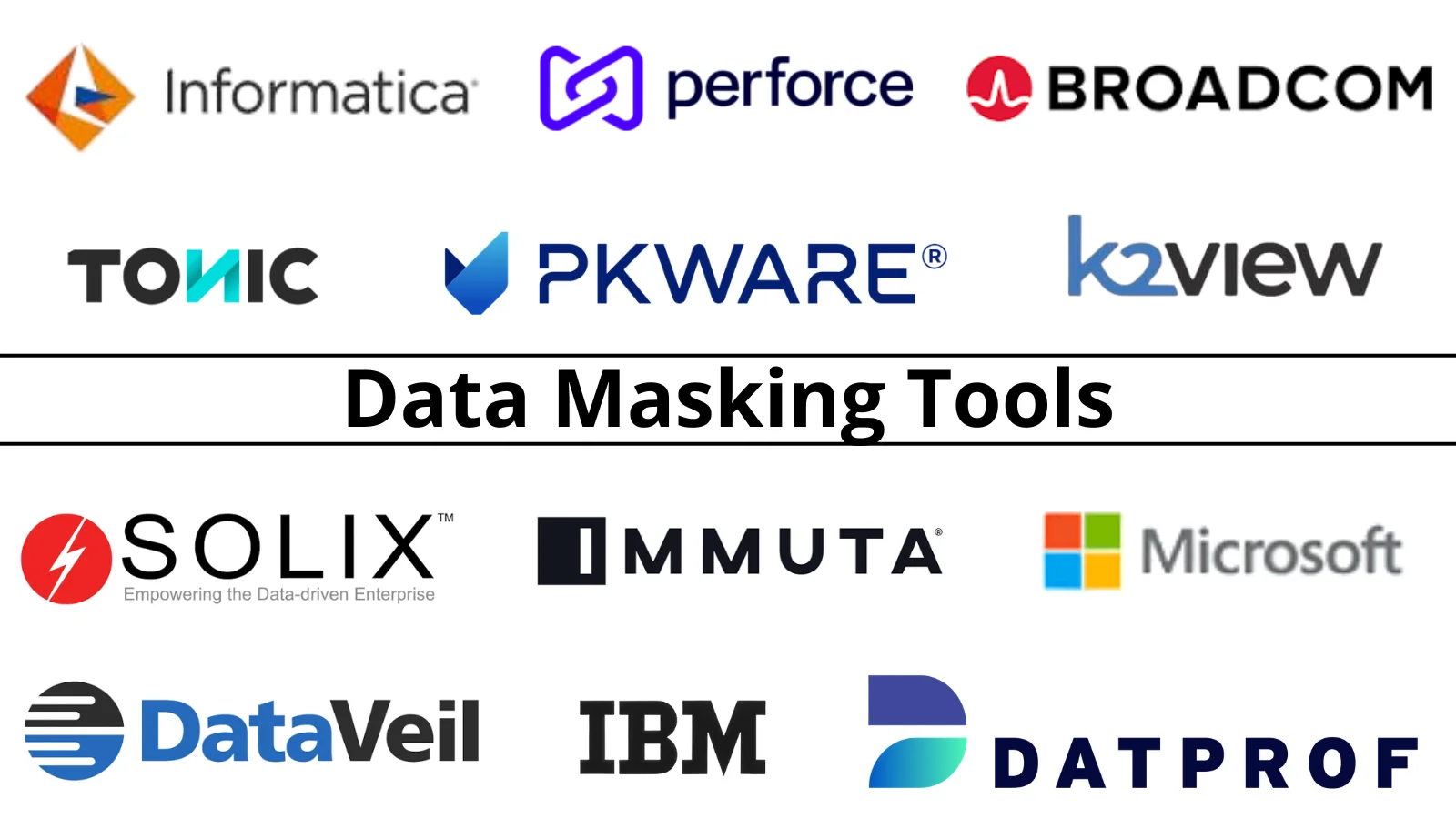
Ma'lumotlarni Maskalash Vositalari
Ma'lumotlarni maskalash aynan ikkita joyda muvaffaqiyatsizlikka uchraydi: birlashmalar (join) buziladi va nusxalar uch hafta vaqt oladi — shuning uchun bu xaridor hukmi qo'llanmasi o'n ikkita vositani demo namoyishlari o'tkazib yuboradigan xususiyatlar bo'yicha baholaydi: tizimlararo referensial yaxlitlik, ishlab chiquvchilar haqiqatan foydalanadigan muhitlarga yetkazib berish tezligi va statik-dinamik arxitektura masalasi — bu siz haqiqatan nima sotib olayotganingizni belgilaydi.
AI o'quv to'plamlari endi test va tahlil ma'lumotlari bilan birga maskalangan ma'lumot iste'molchilari sifatida qo'shilganligi sababli, 2026 yildagi xaridni to'g'ri tanlashning oqibatlari har chorakda ortib bormoqda.
Dinamik va statik ma'lumotlarni maskalash mexanizmlarini joriy etish qat'iy chegara himoyalarini o'rnatishga yordam beradi, ko'pincha maxsus ma'lumotlar yo'qotilishini oldini olish (DLP) dasturlari bilan birgalikda ishlaydi va sezgir ma'lumotlar bazasi nusxalarining xavfsiz muhitlardan tashqariga chiqishining oldini oladi.
Biz Qanday Baholadik
Besh mezon bo'yicha tadqiqotga asoslangan baholash: referensial yaxlitlik (jadvalaro, tizimlararo deterministik), yetkazib berish tezligi (maskalangan nusxagacha soatlar — qabul qilishni belgilovchi omil), texnika kengligi (statik, dinamik, sintetik yaqinlik), mulk qamrovi (eski dvigatellardan omborlargacha) va model bo'yicha narxlash tuzilishi. Zarur hollarda yangilash yo'li doirasida baholandi; pullik joylashtirishlar yo'q.
O'n Ikki Vosita, Ko'rib Chiqilgan va Baholangan
- Informatica — Platforma Kengligi Maskalovchisi
Informatica — Platforma Kengligi Maskalovchisi
Informatica o'z integratsiya matosi yetadigan har joyda maskalaydi: yuzlab manbalarda doimiy va dinamik maskalash, kashfiyotga asoslangan siyosatlar va CLAIRE davri avtomatlashtirish — ma'lumotlarni boshqarish stekida standartlashtirilgan korxonalar uchun tabiiy tanlov.
Platforma bo'ylab maskalashni maxsus ma'lumotlar xavfsizligi holatini boshqarish (DSPM) vositalari bilan integratsiya qilish yuqori xavfli, maskalanmagan ma'lumotlar omborlarining to'liq ko'rinishini ta'minlaydi.
Asosiy imkoniyatlar: manba kengligi yetakchiligi; kashfiyotdan siyosatga oqim; statik + dinamik qamrov.
Narxlash tuzilishi: platforma taklifi.
Hukm: platforma mulki tanlovi.
- Tonic.ai (Tonic Structural) — Ishlab Chiquvchi Tayyor Test Ma'lumotlari Maskalovchisi
Tonic.ai (Tonic Structural) — Ishlab Chiquvchi Tayyor Test Ma'lumotlari Maskalovchisi
Tonic Structural ishlab chiqarish darajasidagi ma'lumotlar to'plamlaridan realistik, maxfiylik xavfsiz test ma'lumotlarini yaratishga e'tibor qaratadi.
U sezgir ma'lumotlarni identifikatsiyadan chiqarish bilan ma'lumotlar kichik to'plamini ajratish va munosabatlarni saqlashni birlashtiradi, bu esa ishlab chiquvchi jamoalarga muhim jadval munosabatlarini buzmasdan foydalanish mumkin bo'lgan ma'lumotlar to'plamlarini yaratishga yordam beradi.
Ishlab chiquvchi tayyor test ma'lumotlarini yaratishni maxsus ma'lumotlar maxfiyligi boshqaruv platformalari bilan birga joriy etish ishlab chiqarishdan tashqari muhitlarning qat'iy global maxfiylik talablariga mos kelishini ta'minlaydi, shuningdek uning identifikatsiyadan chiqarish ish oqimlarini avtomatlashtirilgan ma'lumotlar tasniflash vositalari bilan birlashtirish xavfsizlik jamoalariga maskalanmagan PII ni kod sahnalash quvurlariga yetib borishidan oldin aniqlashga imkon beradi.
Asosiy imkoniyatlar: sezgir ma'lumotlarni kashfiyot va identifikatsiyadan chiqarish; referensial yaxlitlikni saqlash; ma'lumotlar kichik to'plamini ajratish; ishlab chiquvchi tayyor test ma'lumotlari.
Narxlash tuzilishi: taklif asosida; joriy narxni sotuvchi bilan tasdiqlang.
Hukm: realistik, referensial yaxlit test ma'lumotlari uchun ishlab chiquvchiga yo'naltirilgan tanlov. Oracle ma'lumotlar bazasi mosligi, tizimlararo izchillik va har qanday dinamik maskalash talablarini joriy etishdan oldin tekshiring.
- Delphix (Perforce) — Yetkazib Berish Tezligi Yetakchisi
Delphix (Perforce) — Yetkazib Berish Tezligi Yetakchisi
Delphix maskalashning haqiqiy qotili — ta'minotni hal qildi: virtualizatsiyalangan ma'lumot nusxalari maskalangan va referensial yaxlit holda daqiqalarda ishga tushadi, shuning uchun uning maskalashi haqiqatan ishlatiladi. Perforce sotib olishi uni DevOps portfeliga kiritadi; yangi tom ostida qadoqlashni tasdiqlang.
Tez, maskalangan muhitlarni to'g'ridan-to'g'ri CI/CD quvurlariga yetkazib berish zamonaviy DevSecOps platformalari tomonidan taqdim etiladigan himoyalarni to'ldiradi.
Asosiy imkoniyatlar: virtualizatsiya tezligida maskalangan yetkazib berish; deterministik maskalash; CI/CD davri ish oqimi.
Narxlash tuzilishi: platforma taklifi.
Hukm: tezlik tanlovi — ishlab chiquvchilar aylanib o'tmaydigan maskalash.
- PKWARE — Kashfiyotda Himoya Qiluvchi Maskalovchi
PKWARE — Kashfiyotda Himoya Qiluvchi Maskalovchi
PKWARE (Dataguise avlodi) kashfiyot bilan darhol harakatni birlashtiradi: sezgir ma'lumotlar topiladi, so'ngra joyida maskalanadi, shifrlanadi yoki qizartiriladi — bulutga yo'naltirilgan raqiblar e'tibordan chetda qoldiradigan eski va IBM i/z mulklarini ham o'z ichiga oladi. Inventarizatsiya bir harakatda himoyaga aylanadi.
Avtomatlashtirilgan joyida maskalash ma'lumotlar tasniflash vositalari bilan muammosiz birlashib, muvofiqlik tekshiruvlaridan oldin sezgir aktivlarni kataloglashtiradi.
Asosiy imkoniyatlar: kashfiyotdan maskaga ish oqimi; eski/asarxona qamrovi; joyida tuzatish.
Narxlash tuzilishi: taklif.
Hukm: aralash davr mulklari uchun top-va-tuzat tanlovi.
- Broadcom (CA Test Data Manager) — Yangilash Yo'li Veteran
Broadcom (CA Test Data Manager) — Yangilash Yo'li Veteran
CA TDM ning maskalash va sintetik yaratish chuqurligi hali ham katta o'rnatilgan bazalarga xizmat qiladi; Broadcom portfel iqtisodiyoti ostida biz uni yangilash baholash yo'li sifatida ramkalaymiz — yo'l xaritasi majburiyatlari ko'chirish xarajatiga nisbatan tortiladi, yangi logotip uchun standart tanlov emas.
Korxona test ma'lumotlarini boshqarishni avtomatlashtirilgan muvofiqlik avtomatlashtirish platformalari bilan birlashtirish ishlab chiqarishdan tashqari ma'lumot nusxalarining global maxfiylik standartlariga mos kelishini tekshiradi.
Asosiy imkoniyatlar: yetuk TDM + sintetik ma'lumotlar; korxona qamrovi.
Narxlash tuzilishi: korxona litsenziyalash.
Hukm: yangilash suhbat yo'li, halol ramkalangan.
- Solix — Arxivga Yaqin Maskalovchi
Solix — Arxivga Yaqin Maskalovchi
Solix o'z korxona ma'lumotlarini boshqarish mulki doirasida maskalashni taqdim etadi — arxivlash, ilova nafaqaga chiqarish, test ma'lumotlari — shuning uchun maskalangan nusxalar, nafaqaga chiqarilgan ilovalar va boshqariladigan arxivlar bitta platformani ulashadi. Ma'lumotlar hayot sikli, faqat test ma'lumotlari emas, loyihaning maqsadi bo'lgan joyda pragmatik.
Ilova arxivlash va ma'lumotlar himoyasini birlashtirish korxona zaxira nusxasi va tiklash yechimlari bilan birgalikda ishlaydi va tarixiy ma'lumotlar omborlarining to'liq sanitatsiyalanganligini ta'minlaydi.
Asosiy imkoniyatlar: maskalash + arxivlash birligi; ilova nafaqaga chiqarish ish oqimlari; hayot sikli ramkasi.
Narxlash tuzilishi: platforma taklifi.
Hukm: hayot siklini birlashtirish tanlovi.
- IBM (Optim) — Eski Mulk Ishchi Oti
IBM (Optim) — Eski Mulk Ishchi Oti
Optim hali ham boshqalar yetib bora olmaydigan narsalarni maskalaydi — DB2, IMS, asosiy ramka tekis fayllari bilan birga tarqatilgan maqsadlar, o'nlab yillar davomida qo'lga kiritilgan kichik to'plam va arxivlash chuqurligi. Eski platformalar toj zargarliklarini saqlagan joyda u hali ham realistik javob bo'lib qoladi.
Eski infratuzilma ma'lumotlar omborlarini himoya qilish kengroq bulut shifrlash yechimlari bilan mos keladi va zamonaviy mikroxizmatlar hamda eski ma'lumotlar bazalarini xavfsiz qiladi.
Asosiy imkoniyatlar: asosiy ramkadan tarqatilganga qadar qamrov; kichik to'plam chuqurligi; arxiv juftligi.
Narxlash tuzilishi: litsenziyalangan/taklif.
Hukm: eski qamrov tanlovi.
- DATPROF — Test Ma'lumotlari Pragmatisti
DATPROF — Test Ma'lumotlari Pragmatisti
DATPROF test ma'lumotlari ishini o'rta bozor aql-idroki bilan e'tiborga oladi: ma'lumotlar bazalariaro izchillik bilan maskalash, aqlli kichik to'plam ajratish va o'z-o'ziga xizmat ko'rsatish ta'minot portallari — jamoalar korxona dasturisiz to'g'ri o'lchamli test ma'lumotlarini oladi. Yevropa ildizlari, amaliy narxlash.
Dasturiy ta'minot ishlab chiquvchilari uchun test ma'lumotlarini ta'minotni soddalashtirish CI/CD quvur xavfsizlik vositalari tomonidan bajariladigan xavfsizlik tekshiruvlarini to'ldiradi.
Asosiy imkoniyatlar: izchil maskalash + kichik to'plam; o'z-o'ziga xizmat test ma'lumotlari portallari; yondashuvchan joriy etish.
Narxlash tuzilishi: darajali/taklif.
Hukm: o'rta bozor TDM tanlovi.
- Microsoft — Birlashtirilgan Dinamik Zamin
Microsoft — Birlashtirilgan Dinamik Zamin
SQL Server va Azure SQL dinamik ma'lumotlar maskalashni platforma xususiyati sifatida taqdim etadi — taqdimot qatlamini himoya qilish bugun tushdan keyin yoqiladi, Azure tasniflash bilan juftlashadi. Zamin, dastur emas: nusxalar va imtiyozli foydalanuvchilar dizayn bo'yicha himoyalanmagan qoladi.
Mahalliy dinamik maskalashdan foydalanish jamoalar yuqori xavfli to'lov ma'lumotlari uchun maxsus tokenizatsiya yechimlarini baholayotganda darhol asosiy himoyani ta'minlaydi.
Asosiy imkoniyatlar: nol xarajatli DDM yoqish; Azure tasniflash juftligi; darhol siyosat boshlanishi.
Narxlash tuzilishi: birlashtirilgan.
Hukm: bugun yoqiladigan zamin — so'ngra haqiqiy dasturni quring.
- Immuta — So'rov Vaqtida Siyosat Maskalovchisi
Immuta — So'rov Vaqtida Siyosat Maskalovchisi
Immuta ko'l hovuzi platformalarida so'rov vaqtida maskalaydi: oddiy til ABAC siyosatlari Snowflake/Databricks mahalliy ijrosiga kompilyatsiya qilinadi — k-anonimlashtirish, xeshlash, foydalanuvchi atributiga ko'ra bekor qilish — nusxalar yo'q, quvurlar qayta yozilmaydi.
Ombor davri uchun qurilgan dinamik maskalash. So'rov vaqtidagi atribut nazoratini joriy etish ma'lumotlar maxfiyligi boshqaruv platformalari tomonidan boshqariladigan kengroq boshqaruvni to'ldiradi.
Asosiy imkoniyatlar: mahalliy siyosat pastga surish; atributga asoslangan dinamik maskalash; kashfiyotdan siyosatga aylanish.
Narxlash tuzilishi: taklif/darajali.
Hukm: ko'l hovuzi dinamik tanlovi.
- K2view — Subyekt Izchilligi Dvigateli
K2view — Subyekt Izchilligi Dvigateli
K2view biznes subyekti bo'yicha tashkil qiladi — bitta mijoz, har bir tizim — shuning uchun bir xil shaxs CRM, hisob-kitob va ombor nusxalarida bir xil maskalanadi: test ma'lumotlari jamoalari har kuni his qiladigan tizimlararo deterministik sinov, shuningdek bir xil modelda sintetik yaratish.
Subyekt darajasidagi deterministikni saqlash GDPR muvofiqlik dasturlari standartlari kabi global ramkalar ostidagi muvofiqlik talablarini qo'llab-quvvatlaydi.
Asosiy imkoniyatlar: subyektga asoslangan tizimlararo izchillik; maskalash + sintetik birligi; TDM ish oqimi.
Narxlash tuzilishi: platforma taklifi.
Hukm: bitta shaxs — bitta niqob tanlovi.
- DataVeil — Bepul Kirish Statik Maskalovchisi
DataVeil — Bepul Kirish Statik Maskalovchisi
DataVeil SQL ma'lumotlar bazalarini kichik jamoalar bu hafta boshlashi mumkin bo'lgan narxda maskalaydi — kichik ma'lumotlar bazalarida bepul, mustahkam funksiya chuqurligi bilan to'g'ri statik maskalash, fayllar uchun FileMasker hamrohi. Kategoriyaning halol kirish nuqtasi.
Mavjud statik maskalash vositalari bilan boshlash muhandislik jamoalariga ilg'or sirlarni boshqarish vositalarini joriy etishdan oldin xavflarni kamaytirishga yordam beradi.
Asosiy imkoniyatlar: bepul daraja statik maskalash; SQL dvigatel qamrovi; oddiy ishlash.
Narxlash tuzilishi: bepul daraja + litsenziyalar.
Hukm: nol byudjet boshlang'ich nuqtasi.
To'liq Taqqoslash Jadvali
VositaOg'irlik markaziReferensial yaxlitlikYetkazib berish tezligiDinamik qobiliyatNarxlash modeli InformaticaPlatforma kengligiKuchliO'rtachaHaTaklif Tonic.ai (Tonic Structural)Ishlab chiquvchi tayyor test ma'lumotlariKuchliTalab bo'yicha ta'minot; PoC da tekshiringAsosiy e'tibor emas; talablarni tekshiringSotuvchi bilan bog'laning DelphixYetkazib berish tezligiKuchliDaqiqalar (ma'lumot)QismanTaklif PKWARETop-va-tuzatYaxshiJoyidaQismanTaklif BroadcomYangilash yo'liKuchliO'rtachaQismanLitsenziyalash SolixHayot sikli birligiYaxshiO'rtachaQismanTaklif IBM OptimEski qamrovKuchliSekin-o'rtachaQismanTaklif DATPROFO'rta bozor TDMIzchilTez (portallar)Yo'qDarajali MicrosoftBirlashtirilgan zaminYengilDarhol (DDM)Ha (DDM)Birlashtirilgan ImmutaSo'rov vaqti siyosatiN/A (nusxalar yo'q)DarholHa (asosiy)Taklif K2viewSubyekt izchilligiMa'lumot darajasiTezHaTaklif DataVeilBepul kirishMa'lumotlar bazasi bo'yichaQo'ldaYo'qBepul daraja
Ha/Yo'q Qobiliyat Jadvali
VositaStatik maskalash?Dinamik/so'rov vaqti maskalash?Tizimlararo deterministik izchillik?Sintetik ma'lumotlar yaratish?Bepul daraja yoki birlashtirilgan kirish? InformaticaHaHaHaQismanYo'q Tonic.ai (Tonic Structural)HaYo'qHaQisman [TEKSHIRING]Yo'q DelphixHaQismanHaQisman [TEKSHIRING]Yo'q PKWAREHaQismanYaxshiYo'qYo'q BroadcomHaQismanHaHaYo'q SolixHaQismanHaQisman [TEKSHIRING]Yo'q IBM OptimHaQismanHaYo'qYo'q DATPROFHaYo'qHaHaSinov MicrosoftQismanHa (DDM)YengilYo'qHa ImmutaYo'qHa (asosiy)N/AYo'qYo'q K2viewHaHaHa (subyekt)HaYo'q DataVeilHaYo'qMa'lumotlar bazasi bo'yichaYo'qHa
Xarid Nazorat Ro'yxati
Har bir isbotlash kontseptsiyasida ikkita qotil sinovni o'tkazing: ID si oltita jadvalda ikkita ma'lumotlar bazasida tarqalgan mijozni maskalang va har bir birlashma hali ham ishlashini tekshiring (buzilgan yaxlitlik birinchi to'siq sprintida maskalashni o'chirib qo'yadi), so'ngra maskalangan nusxagacha to'liq jarayonni soatlarda o'lchang (uch haftalik ta'minot ishlab chiquvchilarning jimgina ishlab chiqarish klonlariga qaytishini kafolatlaydi — Delphix sinfi virtualizatsiyasi aynan shu matematik tufayli mavjud).
Xaridlarni halol ajrating: statik maskalash (Delphix, K2view, Optim, DATPROF yo'llari) nusxalarni himoya qiladi; dinamik maskalash (Immuta, DDM) jonli so'rov yo'llarini himoya qiladi — tartibga solinadigan mulklar ikkalasiga ham muhtoj va ular turli qator elementlari.
Birlashtirilgan zaminlarni bugun, qat'iy nazar, yoqing
Data Masking Tools
Data masking fails in exactly two places joins that break and copies that take three weeks so this buyer’s verdict guide judges twelve tools on the properties demos skip: referential integrity across systems, delivery speed to the environments developers actually use, and the static-versus-dynamic architecture question that decides what you’re really buying.
With AI training sets now joining test and analytics as masked-data consumers, the stakes on getting 2026’s purchase right compound quarterly.
Deploying dynamic and static data masking mechanisms helps establish strict boundary protections, frequently working alongside specialized data loss prevention (DLP) software to prevent sensitive database dumps from leaving secure environments.
How We Evaluated
Research-based assessment across five criteria: referential integrity (cross-table, cross-system determinism), delivery velocity (hours-to-masked-copy, the adoption decider), technique breadth (static, dynamic, synthetic adjacency), estate reach (legacy engines through warehouses), and pricing structure by model. Renewal-lane framing applied where warranted; no paid placements.
The Twelve Tools, Reviewed and Judged
- Informatica — The Platform-Breadth Masker
Informatica — The Platform-Breadth Masker
Informatica masks wherever its integration fabric reaches: persistent and dynamic masking across hundreds of sources, discovery-driven policies, and CLAIRE-era automation the natural pick for enterprises standardized on its data-management stack.
Integrating platform-wide masking with dedicated data security posture management (DSPM) tools provides complete visibility into high-risk, unmasked data repositories.
Key capabilities: source-breadth leadership; discovery-to-policy flow; static + dynamic coverage.
Pricing structure: platform quote.
Verdict: the platform-estate pick.
- Tonic.ai (Tonic Structural) — The Developer-Ready Test Data Masker
Tonic.ai (Tonic Structural) — The Developer-Ready Test Data Masker
Tonic Structural focuses on generating realistic, privacy-safe test data from production-like datasets.
It combines sensitive-data de-identification with data subsetting and relationship preservation, helping development teams create usable datasets without breaking critical table relationships.
Integrating developer-ready test data generation alongside dedicated data privacy management platforms ensures non-production environments comply with strict global privacy mandates, while pairing its de-identification workflows with automated data classification tools allows security teams to catch unmasked PII before code reaches staging pipelines.
Key capabilities: sensitive-data discovery and de-identification; referential-integrity preservation; data subsetting; developer-ready test data.
Pricing structure: quote-based; confirm current pricing with the vendor.
Verdict: the developer-focused pick for realistic, referentially intact test data. Validate Oracle database compatibility, cross-system consistency, and any dynamic masking requirements before deployment.
- Delphix (Perforce) — The Delivery-Speed Leader
Delphix (Perforce) — The Delivery-Speed Leader
Delphix solved masking’s real killer provisioning: virtualized data copies spin up masked and referentially intact in minutes, which is why its masking actually gets used. The Perforce acquisition folds it into a DevOps portfolio; confirm packaging under the new roof.
Delivering rapid, masked environments directly into CI/CD pipelines complements protections offered by modern DevSecOps platforms.
Key capabilities: virtualization-speed masked delivery; deterministic masking; CI/CD-era workflow.
Pricing structure: platform quote.
Verdict: the velocity pick masking developers don’t route around.
- PKWARE — The Protect-at-Discovery Masker
PKWARE — The Protect-at-Discovery Masker
PKWARE (Dataguise lineage) pairs discovery with immediate action: sensitive data found then masked, encrypted, or redacted in place including legacy and IBM i/z estates cloud-native rivals skip. Inventory becoming protection in one motion.
Automated in-place masking pairs seamlessly with data classification tools to catalog sensitive assets before compliance audits.
Key capabilities: discovery-to-mask workflow; legacy/mainframe reach; in-place remediation.
Pricing structure: quote.
Verdict: the find-and-fix pick for mixed-era estates.
- Broadcom (CA Test Data Manager) — The Renewal-Lane Veteran
Broadcom (CA Test Data Manager) — The Renewal-Lane Veteran
CA TDM’s masking and synthetic-generation depth still serves large installed bases; under Broadcom’s portfolio economics we frame it as a renewal evaluation roadmap commitments weighed against migration cost rather than a new-logo default.
Pairing enterprise test data management with automated compliance automation platforms verifies that non-production data copies meet global privacy standards.
Key capabilities: mature TDM + synthetic data; enterprise coverage.
Pricing structure: enterprise licensing.
Verdict: the renewal-conversation lane, framed honestly.
- Solix — The Archive-Adjacent Masker
Solix — The Archive-Adjacent Masker
Solix delivers masking within its enterprise-data-management estate archiving, application retirement, test data so masked copies, retired apps, and governed archives share one platform. Pragmatic where data lifecycle, not just test data, is the project.
Consolidating application archiving and data protection works alongside enterprise backup and recovery solutions to ensure historical datastores remain fully sanitized.
Key capabilities: masking + archiving unity; application-retirement workflows; lifecycle framing.
Pricing structure: platform quote.
Verdict: the lifecycle-consolidation pick.
- IBM (Optim) — The Legacy-Estate Workhorse
IBM (Optim) — The Legacy-Estate Workhorse
Optim still masks what others can’t reach DB2, IMS, mainframe flat files alongside distributed targets, with subsetting and archiving depth earned over decades. Where legacy platforms hold the crown jewels, it remains the realistic answer.
Protecting legacy infrastructure datastores aligns with broader cloud encryption solutions to secure both modern microservices and legacy databases.
Key capabilities: mainframe-to-distributed reach; subsetting depth; archival pairing.
Pricing structure: licensed/quote.
Verdict: the legacy-reach pick.
- DATPROF — The Test-Data Pragmatist
DATPROF — The Test-Data Pragmatist
DATPROF focuses the test-data job with mid-market sanity: masking with cross-database consistency, smart subsetting, and self-service provisioning portals teams get right-sized test data without an enterprise program. European roots, practical pricing.
Streamlining test-data provisioning for software developers complements security checks executed by CI/CD pipeline security tools.
Key capabilities: consistent masking + subsetting; self-service test-data portals; approachable deployment.
Pricing structure: tiered/quote.
Verdict: the mid-market TDM pick.
- Microsoft — The Bundled Dynamic Floor
Microsoft — The Bundled Dynamic Floor
SQL Server and Azure SQL ship dynamic data masking as a platform feature presentation-layer protection enabled this afternoon, with Azure’s classification pairing. A floor, not a program: copies and privileged users remain unprotected, by design.
Utilizing native dynamic masking provides an immediate baseline defense while teams evaluate dedicated tokenization solutions for higher-risk payment data.
Key capabilities: zero-cost DDM enablement; Azure classification pairing; instant policy start.
Pricing structure: bundled.
Verdict: the enable-today floor then build the real program.
- Immuta — The Query-Time Policy Masker
Immuta — The Query-Time Policy Masker
Immuta masks at query time on lakehouse platforms: plain-language ABAC policies compiling into native Snowflake/Databricks enforcement k-anonymization, hashing, nulling per user attribute no copies, no pipelines rewritten.
Dynamic masking built for the warehouse era. Enforcing query-time attribute controls complements broader governance managed by data privacy management platforms.
Key capabilities: native policy pushdown; attribute-based dynamic masking; discovery-to-policy loop.
Pricing structure: quote/tiered.
Verdict: the lakehouse dynamic pick.
- K2view — The Entity-Consistency Engine
K2view — The Entity-Consistency Engine
K2view organizes by business entity one customer, every system so the same person masks identically across CRM, billing, and warehouse copies: the cross-system determinism test-data teams feel daily, plus synthetic generation on the same model.
Maintaining entity-level determinism supports compliance requirements under global frameworks like GDPR compliance software standards.
Key capabilities: entity-based cross-system consistency; masking + synthetic unity; TDM workflow.
Pricing structure: platform quote.
Verdict: the one-person-one-mask pick.
- DataVeil — The Free-Entry Static Masker
DataVeil — The Free-Entry Static Masker
DataVeil masks SQL databases at a price that lets small teams start this week free on smaller databases, straightforward static masking with solid function depth, FileMasker sibling for files. The honest on-ramp of the category.
Starting with accessible static masking tools helps engineering teams reduce risks before implementing advanced secrets management tools.
Key capabilities: free-tier static masking; SQL-engine coverage; simple operation.
Pricing structure: free tier + licenses.
Verdict: the zero-budget starting point.
Full Comparison Table
ToolCenter of gravityReferential integrityDelivery speedDynamic capabilityPricing model InformaticaPlatform breadthStrongModerateYesQuote Tonic.ai (Tonic Structural)Developer-ready test data Strong On-demand provisioning; validate in PoC Not its primary focus; verify requirements Contact vendor DelphixDelivery velocityStrongMinutes (reference)Partial Quote PKWARE Find-and-fix Good In-place Partial Quote Broadcom Renewal lane Strong Moderate Partial Licensing Solix Lifecycle unity Good Moderate Partial Quote IBM OptimLegacy reachStrongSlow-moderate Partial Quote DATPROFMid-market TDMConsistentFast (portals)No Tiered Microsoft Bundled floor Light Instant (DDM)Yes (DDM)Bundled ImmutaQuery-time policyN/A (no copies)InstantYes (core)Quote K2viewEntity consistencyReference-gradeFast Yes Quote DataVeil Free entry Per-database Manual NoFree tier
Yes/No Capability Table
ToolStatic masking?Dynamic/query-time masking?Cross-system deterministic consistency?Synthetic data generation?Free tier or bundled entry? InformaticaYesYesYesPartial No Tonic.ai (Tonic Structural)YesNo Yes Partial [VERIFY]No DelphixYesPartialYesPartial [VERIFY]No PKWAREYesPartial Good No No BroadcomYesPartialYesYesNo SolixYesPartial Yes Partial [VERIFY]No IBM OptimYesPartialYesNo No DATPROFYesNoYesYesTrial Microsoft PartialYes (DDM)Light NoYes Immuta NoYes (core)N/A No No K2viewYesYesYes (entity)YesNo DataVeilYesNo Per-database NoYes
The Buying Checklist
Run the two killer tests in every proof of concept: mask a customer whose ID spans six tables in two databases and verify every join still works (broken integrity gets masking disabled by the first blocked sprint), then time hours-to-masked-copy end-to-end (three-week provisioning guarantees developers quietly revert to production clones Delphix-class virtualization exists because of that math).
Separate the purchases honestly: static masking (Delphix, K2view, Optim, DATPROF lanes) protects copies; dynamic masking (Immuta, DDM) protects live query paths regulated estates need both, and they are different line items.
Enable bundled floors today regardless, interrogate renewal lanes (Broadcom) on roadmap in writing, scope legacy reach truthfully (Optim/PKWARE where big iron lives), and add 2026’s named scenario to the PoC: masked-data feeds for AI training, because the next consumer of your test data is a model, and irreversibility claims deserve legal’s sign-off.
Securing access to AI development environments also requires validating API interfaces using PCI DSS 4.0 API security guidelines.
FAQs
What are the best data masking tools in 2026?
Delphix for delivery speed, Informatica for platform breadth, K2view for entity-grade consistency, Immuta for lakehouse query-time masking, Optim for legacy reach, DATPROF for mid-market TDM, DataVeil for free entry static and dynamic bought as the different purchases they are.
Static vs dynamic masking?
Static rewrites copies for test/analytics; dynamic transforms results at query time on live systems. Different exposures, different tools most regulated estates run both.
Why do masking projects fail?
Broken referential integrity and slow delivery developers bypass whatever blocks a sprint. Buy for the two killer tests, not technique checklists.
Properly irreversible masking can take non-production copies out of much regulatory scope; reversible or poorly keyed masking doesn’t. Treat it as legal-plus-engineering, verified per regulation, and audit controls continuously with dedicated GDPR compliance software solutions.
Is synthetic data replacing masking?
Complementing it: synthetic shines for greenfield cases and AI experimentation (K2view/DATPROF/Broadcom carry both); masked production still wins where realistic distributions and edge cases decide test value.
Final Word
Twelve tools, two tests, one truth: masking succeeds when developers never notice it.
Delphix makes copies arrive fast enough to use, K2view keeps one person one mask everywhere, Informatica and Optim span the estates old and new, Immuta polices the warehouse at query time, Microsoft’s floor costs nothing to enable, DataVeil starts the smallest teams today run the joins, start the stopwatch, split static from dynamic, and let the sprint that doesn’t break be your signature on the contract.
Author: [AUTHOR NAME], [credential]. Reviewed by: [REVIEWER NAME]. Last updated: October 2026. GBHackers editorial is independent; no paid placement; assessments are research-based, not lab-tested.
Read next on GBHackers:
• Best Database Security Tools: Buyer’s Verdict Guide
• Best Tokenization Solutions: Buyer’s Verdict Guide
• Best Data Classification Tools: Buyer’s Verdict Guide
• Best Encryption & Key Management: Buyer’s Verdict Guide
• Best Data Privacy Management Platforms: Buyer’s Verdict Guide
• Best DLP Software: Buyer’s Verdict Guide
• Best DSPM Tools Compared and Priced
• Best DevSecOps Platforms: Buyer’s Verdict Guide
• Best Backup & Recovery Solutions: Buyer’s Verdict Guide
• Best CI/CD Pipeline Security Tools: Buyer’s Verdict Guide