Xavfsizlik jamoalarining qirq foizi endi AI dan har kuni foydalanadi, yana 56 foizi uni sinovdan o'tkazmoqda. Faqat 4 foizi uni qabul qilish rejalari yo'q, deb ko'rsatadi Prophet Security'ning 2026-yilgi Xavfsizlik operatsiyalarida AI holati so'rovi, unda 250 dan ortiq CISO, SOC rahbarlari va amaliyotchilar ishtirok etgan. Hali sinovdan o'tkazayotgan jamoalar uchun keyingi qaror — o'z SOC'lari tayyormi yoki yo'qmi.
AI SOC tayyorligi ikki qismdan iborat: SOC AI SOC agentlari uchun mo'ljallangan muammolarga egami, va AI agentlari o'z muhitida ogohlantirishlarni aniq tekshirish uchun zarur bo'lgan ma'lumotlarga kirish, kontekst, yozma standartlar va nazorat qoidalariga egami. SOC tayyor bo'lishi uchun yetuklik modelida ancha oldinga borishi shart emas. AI agentlari birinchi ishni pastki qatlamda, ogohlantirishlarni boshqarishda bajaradi, va ular qaytaradigan tahlilchi soatlari jamoaga yuqoridagi qatlamlar ustida ishlash uchun joy beradi.
Keyingi bo'lim shu muammolarni tasvirlaydi. Texnik tayyorlik to'rt sohani qamrab oladi: kirish va kontekst, asosiy ko'rsatkichlar bilan tekshirish standarti, agent nima qilishi mumkinligi haqidagi qoidalar, va u qaytaradigan vaqt uchun reja.
Qaysi SOC'lar AI SOC agentlaridan eng ko'p foyda oladi
AI SOC agentlaridan eng ko'p foyda oladigan SOC'lar odatda quyidagi muammolarning bir nechtasini tan oladi, tashqi provayder ogohlantirishlarini ishlaydimi yoki o'z tahlilchilari ishlaydimi.
Agar MDR yoki MSSP sizning ogohlantirishlaringizni ishlasa:
- Sizning MDR tahdidlarni juda sekin belgilaydi. Provayder sizning ogohlantirishlaringizni boshqa mijozlari bilan birgalikda ishlaydigan navbatda ishlaydi, shuning uchun haqiqiy kirish uchun eskalatsiya faoliyat boshlanganidan bir necha soat o'tgach kelishi mumkin.
- Sizning MDR kontekst yetishmasligi tufayli ogohlantirishlarni qaytaradi. Eskalatsiya qisqa xulosa va bu kirish kutilganmi, bu ishlab chiqarish serverimi, yoki bu foydalanuvchi sayohat qilayaptimi kabi savollar bilan keladi. Provayder ko'pincha sizning foydalanuvchilaringiz, aktivlaringiz va biznesingizni yetarlicha bilmaydi, shuning uchun tekshirishni tugata olmaydi, va sizning tahlilchilaringiz qolganini bajaradi.
- Sizning MDR o'z ishini ko'rsatmasdan ogohlantirishlarni yopadi. Provayder ogohlantirishni zararsiz deb belgilaganda, eslatma nima tekshirilganini va qanday xulosa qilinganini aytmasligi mumkin, shuning uchun sizning jamoangiz yoki chaqiruvga ishonadi, yoki tekshirishni qayta bajaradi.
- Sizning MDR qamrovi faqat u qo'llab-quvvatlaydigan vositalar bilan cheklanadi. Ko'plab shartnomalar EDR va belgilangan log manbalar ro'yxatini qamrab oladi, shuning uchun boshqa hamma narsadan, masalan SaaS ilovasi yoki ikkinchi bulut platformasidan kelgan ogohlantirishlar sizning jamoangizga tushadi.
Agar o'z tahlilchilaringiz navbatni ishlasa, shu jumladan provayder qaytarib yuborgan narsalar:
- "Biz ta'sirlanganmizmi?" degan savolga javob berish kunlar oladi. Yangi zaiflik yoki yangi kampaniya yangiliklarda paydo bo'lganda, rahbariyat o'sha kuni javob xohlaydi. Buni olish atrof-muhit bo'ylab qo'lda qidirishni talab qiladi, odatda navbatni ham ishlaydigan tahlilchi tomonidan.
- Pastroq jiddiylikdagi ogohlantirishlar kutadi yoki ommaviy yopiladi. To'liq tekshirish SIEM, EDR, identifikatsiya provayderi, bulut konsoli va elektron pochta vositalari bo'ylab o'tishni anglatadi, shuning uchun jamoa muhim va yuqori ogohlantirishlarga yetib boradi va qolganiga vaqti bo'lganda yetib boradi. So'rovda, 60 foiz respondentlar e'tiborsiz qoldirilgan yoki o'tkazib yuborilgan ogohlantirish keyinchalik jiddiy muammoga, masalan buzilish yoki ishlamay qolishga aylanganini aytgan.
- Shovqinli aniqlashlar o'chiriladi. Juda tez-tez ishga tushadigan qoidani sozlash jamoada yo'q vaqti oladi, shuning uchun qoida o'chiriladi va u kuzatgan texnika qoplanmay qoladi.
- Qidirish va aniqlash muhandisligi bo'sh vaqti kutadi. Proaktiv ish kimdir bo'sh tushdan keyin bo'lganda sodir bo'ladi, chunki ogohlantirish navbati birinchi o'rinda turadi.
- Bir necha katta tahlilchilar qiyin holatlarni ko'taradi. Faqat bir yoki ikki kishi eng qiyin tekshirishlarni qanday ishlashni biladi, shuning uchun bitta iste'fo jamoani orqaga surishi mumkin.
- Tungi va dam olish kunlari zaif qoplanadi. Navbatni kun-u tun qoplash byudjet qoplaydigan tahlilchilardan ko'proqni talab qiladi, shuning uchun kechki soatlarda ishga tushadigan ogohlantirishlar ertalabgacha kutadi yoki navbatchiga boradi.
AI SOC agentlari shu ish uchun qurilgan. Ular har bir ogohlantirish kelishi bilan boshlash uchun mo'ljallangan, qaysi vosita uni ko'targanidan va qaysi soatda bo'lishidan qat'i nazar. Ular tashqi provayder yetishmaydigan kontekstni o'z tizimlaringizdan olishi va har bir xulosa ortidagi dalillarni yozib qo'yishi mumkin, shuning uchun sizning jamoangiz uni tekshirishi mumkin. Ba'zilari yangi tahdid e'lon qilingan kuni qidirishni ham bajarishi mumkin, bu "biz ta'sirlanganmizmi?" savolini javoblari bilan so'rovlar to'plamiga aylantiradi. Ular qaytaradigan tahlilchi soatlari bugun kutib turgan aniqlash va qidirish ishiga yo'naltirilishi mumkin.
Agar bu muammolarning bir nechtasi tanish bo'lsa, ehtiyoj bor. Keyingi savol — sizning SOC'ingiz joylashtirishni qo'llab-quvvatlay oladimi.
AI agentlari SOC yetuklik modelida qayerga mos keladi
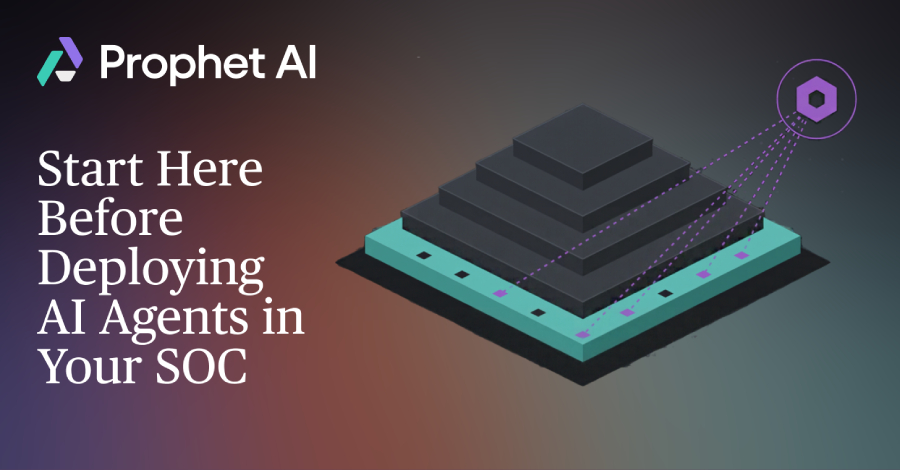
Prophet Security'ning SOC yetuklik modeli, SOC Ehtiyojlar Ierarxiyasi, besh darajaga ega: ogohlantirishlarni boshqarish, aniqlash qamrovi, tahdid xabardorligi, proaktiv qidirish va holat yaxshilanishlari. Har bir daraja pastdagisiga bog'liq. Ogohlantirishlarga ko'milgan jamoa kamdan-kam qidirishga yetib boradi, va tahdid xabardorligisiz qidiradigan jamoa nima qidirishni aniq bilmaydi.
Ko'plab SOC'lar hali birinchi darajani barqarorlashtirmagan. 2026-yilgi Xavfsizlik operatsiyalarida AI holati so'rovida respondentlar o'z ogohlantirishlarining 28 foizi hech qachon tekshirilmasligini aytgan.
AI SOC agentlari odatda shu birinchi darajada boshlaydi, ogohlantirishlar kelishi bilan ularni tekshiradi. Yangi platformalar shuningdek qidirishlarni bajaradi va aniqlashlarni taklif qiladi, bu ish ikkinchi va to'rtinchi darajalarga yetib boradi. Har qanday holatda, ular qaytaradigan tahlilchi soatlari birinchi darajadan yuqoridagi ishga yo'naltiriladi, shuning uchun tayyorlik birinchi daraja ehtiyojlariga bog'liq.
AI agenti faqat so'rashi mumkin bo'lgan narsani tekshirishi mumkin
AI agenti vositalaringizga so'rovlar yuborish orqali tekshiradi, shuning uchun u kirish huquqiga ega bo'lmagan hech narsani ko'ra olmaydi. Agar u EDR'ga so'rashi mumkin bo'lsa, lekin identifikatsiya provayderiga emas, u endpointda nima sodir bo'lganini tasvirlashi mumkin, lekin qaysi hisob ortida ekanligini emas.
Bu yerda tayyorlik uch qismdan iborat:
- Tekshirish uchun zarur manbalarga API kirish. Bu odatda SIEM, EDR, identifikatsiya provayderi, bulut platformalari, elektron pochta va asosiy SaaS ilovalarini anglatadi.
- Agent o'qishi mumkin bo'lgan kontekst. Agent aktiv muhimligi, foydalanuvchi rollari, VIP ro'yxatlari, biznes bo'linmalari va ma'lum zararsiz faoliyat, masalan rejalashtirilgan skanlar va admin skriptlari, hujumchini qonuniy administratordan ajratish uchun kerak.
- Sog'lom ma'lumot quvurlari. Jim yoki kechikkan log manbasi tekshirishni to'liq ko'rinishiga olib kelishi mumkin, aslida asosiy dalillar yetishmayotgan bo'lsa, shuning uchun tekshirishlarni oziqlantiradigan quvurlarning sog'ligi kuzatilishi kerak.
Tez sinov: yaqinda sodir bo'lgan beshta hodisani oling va katta tahlilchi ularni yopish uchun yuborgan har bir so'rovni ro'yxatlang. Agent yubora olmaydigan har qanday so'rov pilotdan oldin yopilishi kerak bo'lgan bo'shliqni belgilaydi.
Ma'lumotlarga kirish shuningdek eng keng tarqalgan e'tirozni keltirib chiqaradi. Bizning so'rovimizda, 44 foiz jamoalar ma'lumot maxfiyligi va AI modellari qanday o'qitilishini eng tez-tez tilga olingan to'siq deb ko'rsatgan. Har bir sotuvchidan sizning ma'lumotlaringiz ularning modellarini o'qitadimi va sizning ma'lumotlaringiz qayerda qayta ishlanadi, deb so'rang.
Tugallangan tekshirishni aniqlang va asosiy ko'rsatkichlaringizni yozib qo'ying
Pilot agentni baholash uchun yozma standartga muhtoj. Ko'plab SOC'larda faqat katta tahlilchilar bu standartni biladi, va u kamdan-kam yozib qo'yiladi.
Standart phishing holatini yopish uchun qaysi dalillar kerakligini, imkonsiz sayohat ogohlantirishi foydalanuvchi rahbariga qo'ng'iroq qilishni talab qilganda, va ogohlantirishni zararsiz deb atash uchun yetarli deb hisoblanadigan narsani qamrab oladi. Sizning hajmning ko'p qismini tashkil etadigan ogohlantirish turlari uchun uni yozib qo'yish yangi tahlilchilarga ham o'rganish hujjatini beradi.
Shuningdek o'chirilgan aniqlashlar ro'yxatini saqlang. Bizning so'rovimizda, tashkilotlarning 40 foizigacha ba'zi aniqlashlarni tekshirish uchun odam yetishmasligi tufayli o'chirgan. Agent har bir ogohlantirishni tekshirganda, bu qoidalarning ba'zilari qaytishi mumkin, va ro'yxat sizga qayerdan boshlashni aytadi.
Keyin siz solishtiradigan raqamlarni yozib qo'ying: tekshirilgan ogohlantirishlar ulushi, tekshirishning o'rtacha vaqti, ogohlantirishdan birinchi ko'rinishgacha bo'lgan vaqt, va yopilgan ogohlantirishlar qayta ochiladigan tezlik. So'rov ma'lumot nuqtasini beradi. To'liq tekshirish o'rtacha 75 daqiqa oladi, va ogohlantirishlar ko'pincha kimdir ularni ochishidan oldin bir soatga yaqin kutadi.
Siz agent nima qilishi mumkinligini va kim ko'proqni tasdiqlashini aniqlang
Tekshirish va harakat turli xavflarni o'z ichiga oladi, va ko'plab jamoalar ularni turlicha davolaydi. So'rovda, 57 foiz jamoalar har bir AI qarorini ogohlantirish yopilishidan oldin inson tekshirishi kerakligini talab qiladi. Javob haqida, 44 foizi AI harakatlarni tavsiya qilishini va odamlar ularni bajarishini, 30 foizi past xavfli tuzatishni o'z-o'zidan bajarishiga ruxsat berishini, va hech kim to'liq, nazoratsiz avtonomiyani bermasligini aytgan.
Tayyor SOC bu qoidalarni pilot boshlanishidan oldin yozib qo'yadi:
- Standart tasdiqlar. Inson tasdiqlangan holda qoladigan harakatlar ro'yxati, masalan hostni izolyatsiya qilish, hisobni o'chirish yoki domenni bloklash.
- Ruxsatlar qanday kengayadi. Kim agentga harakat toifasi uchun ko'proq avtonomiya berishi mumkin, va ular birinchi navbatda qaysi kuzatuv rekordini ko'rishlari kerak.
- Topilmalar qayerga tushadi. Agent topilmalari tahlilchilar allaqachon foydalanadigan holat boshqaruvi yoki chipta vositalarida paydo bo'lishi kerak, shuning uchun hech kim boshqa konsolni kuzatishi shart emas.
- Fikr-mulohaza kimga tegishli. Nomlangan shaxs agentning xatolarini ko'rib chiqadi va tuzatishlarni keyingi safar foydalanadigan yo'riqnomaga aylantiradi.
Tekshirishlar uchun faqat o'qish huquqi bilan boshlash, keyin ishonch o'sishi bilan ruxsatlarni kengaytirish, SOC yangi inson tahlilchisi uchun qo'llaydigan bir xil qoidalarni qo'llaydi. Prophet Security'ning AI SOC'da ishonchni qurish uchun ramkasi xuddi shu bosqichma-bosqich yondashuvni kuzatadi.
Yetuklik modeliga moslashtirilgan tayyorlik tekshiruvi
Har bir savolga ha yoki yo'q deb javob bering. 1-qism ehtiyojni tekshiradi, 2-qism esa texnik tayyorlikni tekshiradi. Qavs ichidagi daraja SOC Ehtiyojlar Ierarxiyasining qaysi qatlamiga tegishli ekanligini ko'rsatadi.
1-qism: Sizning SOC'ingiz AI SOC agentlariga muhtojmi?
- Sizning MDR yoki MSSP'dan eskalatsiyalar faoliyat boshlanganidan bir necha soat o'tgach keladimi? (1-daraja: ogohlantirishlarni boshqarish)
- Sizning provayderingiz kontekst yetishmasligi tufayli ogohlantirishlarni qaytaradimi? (3-daraja: tahdid xabardorligi)
- Sizning provayderingiz nima tekshirilganini ko'rsatmasdan ogohlantirishlarni yopadimi? (1-daraja: ogohlantirishlarni boshqarish)
- Sizning provayderingiz qamrovidan tashqaridagi vositalardan kelgan ogohlantirishlar sizning jamoangizga tushadimi? (1-daraja: ogohlantirishlarni boshqarish)
- Yangi zaiflik yoki kampaniya haqida rahbariyatga ta'sirlanganingizni aytish bir kundan ko'proq vaqt oladimi? (4-daraja: proaktiv qidirish)
- Past va o'rta jiddiylikdagi ogohlantirishlar kutadimi, yoki tekshirishsiz ommaviy yopiladimi? (1-daraja: ogohlantirishlarni boshqarish)
- Shovqinli aniqlashlar hech kim sozlashga vaqti yo'qligi tufayli o'chirilganmi? (2-daraja: aniqlash qamrovi)
- Qidirish va aniqlash muhandisligi kimdir bo'sh vaqti bo'lguncha kutadimi? (4-daraja: proaktiv qidirish)
- Faqat bir yoki ikki katta tahlilchi sizning eng qiyin holatlaringizni ishlashni biladimi? (1-daraja: ogohlantirishlarni boshqarish)
- Tungi yoki dam olish kunlari ishga tushadigan ogohlantirishlar ertalabgacha kutadimi? (1-daraja: ogohlantirishlarni boshqarish)
Har bir "ha" AI SOC agenti olishi mumkin bo'lgan muammodir, va "ha" javoblari qanchalik ko'p bo'lsa, joylashtirish uchun dalil shunchalik kuchliroq.
2-qism: Sizning SOC'ingiz ularni joylashtirishga tayyormi?
- Yangi vosita sizning SIEM, EDR, identifikatsiya, bulut va elektron pochta manbalariga API orqali so'rov yubora oladimi? (1-daraja: ogohlantirishlarni boshqarish)
- Aktiv muhimligi, foydalanuvchi rollari va ma'lum zararsiz faoliyat tizim o'qishi mumkin bo'lgan joyda yozib qo'yilganmi? (3-daraja: tahdid xabardorligi)
- Sizning hajmingizning ko'p qismini tashkil etadigan ogohlantirish turlari uchun to'liq tekshirish nimani o'z ichiga olishini yozma standart bormi? (1-daraja: ogohlantirishlarni boshqarish)
- Qaysi harakatlar inson tasdiqlangan holda qolishi va kim agentning ruxsatlarini kengaytirishi mumkinligi haqida qaror qabul qilinganmi? (1-daraja: ogohlantirishlarni boshqarish)
- Siz tekshirishlaringiz bog'liq bo'lgan log manbalari kelayotganini kuzatasizmi? (2-daraja: aniqlash qamrovi)
- Siz hozirgi tekshirilgan ogohlantirishlar ulushi va tekshirishning o'rtacha vaqti haqida bilasizmi? (1-daraja: ogohlantirishlarni boshqarish)
- Siz sig'im sabablari tufayli o'chirilgan aniqlashlar ro'yxatini saqlaysizmi? (2-daraja: aniqlash qamrovi)
- Agent qaytaradigan tahlilchi soatlari uchun, masalan rejalashtirilgan qidirishlar yoki aniqlash ishi, nomlangan egalar bilan reja bormi? (4-daraja: proaktiv qidirish)
Birinchi to'rtta savoldan birortasiga "yo'q" javobi ishlab chiqarish pilotidan oldin tuzatishga arziydi. Qolgan to'rttasi du
Forty percent of security teams now use AI every day, and another 56% are testing it. Only 4% have no plans to adopt it, according to Prophet Security's State of AI in Security Operations 2026 survey of more than 250 CISOs, SOC leaders and practitioners. For the teams still testing, the next decision is whether their own SOC is ready.
AI SOC readiness has two parts: whether a SOC has the problems AI SOC agents are built for, and whether it has the data access, context, written standards and oversight rules that AI agents need to investigate alerts accurately in its environment. A SOC does not need to be far along a maturity model to be ready. AI agents do their first work on the bottom layer, alert handling, and the analyst hours they return give a team room to work on the layers above it.
The next section describes those problems. Technical readiness covers four areas: access and context, an investigation standard with baseline metrics, rules for what the agent may do, and a plan for the time it gives back.
Which SOCs benefit the most from AI SOC agents
The SOCs that gain the most from AI SOC agents usually recognize several of the problems below, whether an outside provider works their alerts or their own analysts do.
If an MDR or MSSP works your alerts:
- Your MDR flags threats too slowly. The provider works your alerts in a queue it shares with its other customers, so the escalation for a real intrusion can arrive hours after the activity started.
- Your MDR hands alerts back for lack of context. An escalation arrives with a short summary and questions such as is this login expected, is this a production server, or is this user traveling? The provider often does not know your users, assets and business well enough to finish the investigation, so your analysts do the rest.
- Your MDR closes alerts without showing its work. When the provider marks an alert benign, the note may not say what it checked and how it came to that conclusion, so your team either trusts the call or runs the investigation again.
- Your MDR's coverage stops at the tools it supports. Many contracts cover the EDR and a set list of log sources, so alerts from everything else, such as a SaaS application or a second cloud platform, land on your team.
If your own analysts work the queue, including whatever the provider sends back:
- "Are we impacted?" takes days to answer. When a critical vulnerability or a new campaign makes the news, leadership wants an answer the same day. Getting one means hunting across the environment by hand, usually by an analyst who is also working the queue.
- Lower-severity alerts wait or get closed in bulk. A thorough investigation means pivoting across the SIEM, EDR, identity provider, cloud console and email tools, so the team keeps up with critical and high alerts and gets to the rest when it can. In the survey, 60% of respondents said an alert they had ignored or missed later turned into a serious issue, such as a breach or downtime.
- Noisy detections get switched off. Tuning a rule that fires too often takes time the team does not have, so the rule gets disabled and the technique it watched goes uncovered.
- Hunting and detection engineering wait for spare time. Proactive work happens when someone has a free afternoon, because the alert queue comes first.
- A few senior analysts carry the hard cases. Only one or two people know how to work the most difficult investigations, so a single resignation can set the team back.
- Nights and weekends are thinly covered. Staffing the queue around the clock takes more analysts than the budget covers, so alerts that fire after hours wait until morning or go to whoever is on call.
AI SOC agents are built for this work. They are designed to start on each alert as it arrives, whichever tool raised it and at whatever hour. They can pull the context an outside provider lacks from your own systems and record the evidence behind each conclusion, so your team can check it. Some can also run a hunt the day a new threat is disclosed, which turns "are we impacted?" into a set of queries with answers. The analyst hours they return can go to the detection and hunting work that waits today.
If several of these problems sound familiar, the need is there. The next question is whether your SOC can support a deployment.
Where AI agents fit on a SOC maturity model
Prophet Security's SOC maturity model, the SOC Hierarchy of Needs, has five levels: alert management, detection coverage, threat awareness, proactive hunting and posture improvements. Each level depends on the one below it. A team buried in alerts rarely gets to hunting, and a team that hunts without threat awareness has no clear idea what to look for.
Many SOCs have not yet stabilized the first level. In the State of AI in Security Operations 2026 survey, respondents said 28% of their alerts are never investigated.
AI SOC agents usually start at that first level, investigating alerts as they arrive. Newer platforms also run hunts and propose detections, work that reaches into levels two and four. Either way, the analyst hours they return go to work above the first level, so readiness depends on what the first level needs.
An AI agent can only investigate what it can query
An AI agent investigates by running queries against your tools, so it cannot see anything it has no access to. If it can query the EDR but not the identity provider, it can describe what happened on the endpoint but not which account was behind it.
Readiness here has three parts:
- API access to the sources an investigation needs. That usually means the SIEM, EDR, identity provider, cloud platforms, email and key SaaS applications.
- Context the agent can read. An agent needs asset criticality, user roles, VIP lists, business units and known-benign activity, such as scheduled scans and admin scripts, to tell an attacker from a legitimate administrator.
- Healthy data pipelines. A silent or delayed log source can make an investigation look complete when key evidence is missing, so the health of the pipelines that feed investigations needs monitoring.
A quick test: take five recent incidents and list every query a senior analyst ran to close them. Any query the agent could not run marks a gap to close before a pilot.
Data access also raises the most common objection. In our survey, 44% of teams cited data privacy and how AI models are trained, the most frequent roadblock respondents named. Ask each vendor whether your data trains their models and where your data is processed.
Define a finished investigation and record your baseline
A pilot needs a written standard to grade the agent against. In many SOCs, only senior analysts know that standard, and it is rarely written down.
The standard covers which evidence closes a phishing case, when an impossible-travel alert needs a call to the user's manager, and what counts as enough to call an alert benign. Writing it down for your highest-volume alert types also gives new analysts an onboarding document.
Also keep a list of the detections that were switched off. In our survey, up to 40% of organizations had turned off some detections because they lacked the people to check them. When an agent investigates every alert, some of those rules can come back, and the list tells you where to start.
Then record the numbers you will compare against: the share of alerts investigated, mean time to investigate, time from alert to first look, and how often closed alerts are reopened. The survey gives a reference point. A thorough investigation takes an average of 75 minutes, and alerts often wait close to an hour before anyone opens them.
You can download our guide on detection engineering to learn more about how an agentic SOC benefits detection engineering.
Decide what the agent may do, and who approves more
Investigation and action carry different risks, and most teams treat them differently. In the survey, 57% of teams require a human to review every AI decision before an alert is closed. On response, 44% have AI recommend actions that people carry out, 30% let it handle low-risk remediation on its own, and no respondent gives it full, unsupervised autonomy.
A ready SOC has these rules written down before a pilot starts:
- Default approvals. A list of the actions that stay human-approved, such as isolating a host, disabling an account or blocking a domain.
- How permissions widen. Who can grant the agent more autonomy for a category of action, and what track record they need to see first.
- Where findings land. Agent findings should appear in the case management or ticketing tools analysts already use, so nobody has to watch another console.
- Who owns feedback. A named person reviews the agent's mistakes and turns corrections into guidance it will use next time.
Starting with read-only access for investigations, then widening permissions as confidence grows, applies the same rules a SOC uses for a new human analyst. Prophet Security's framework for building trust in an AI SOC follows the same stepwise approach.
A readiness checklist mapped to the maturity model
Answer each question yes or no. Part 1 checks the need, and Part 2 checks technical readiness. The level in parentheses shows which layer of the SOC Hierarchy of Needs each item belongs to.
Part 1: Does your SOC need AI SOC agents?
- Do escalations from your MDR or MSSP arrive hours after the activity started? (Level 1: alert management)
- Does your provider hand alerts back because it lacked the context to finish them? (Level 3: threat awareness)
- Does your provider close alerts without showing what it checked? (Level 1: alert management)
- Do alerts from tools outside your provider's coverage land on your team? (Level 1: alert management)
- Does it take more than a day to tell leadership whether you are impacted by a new vulnerability or campaign? (Level 4: proactive hunting)
- Do low- and medium-severity alerts wait, or get closed in bulk without an investigation? (Level 1: alert management)
- Have noisy detections been switched off because no one had time to tune them? (Level 2: detection coverage)
- Do hunting and detection engineering wait until someone has spare time? (Level 4: proactive hunting)
- Do only one or two senior analysts know how to work your hardest cases? (Level 1: alert management)
- Do alerts that fire at night or on weekends wait until morning? (Level 1: alert management)
Each yes is a problem an AI SOC agent can take on, and the more yes answers, the stronger the case for a deployment.
Part 2: Is your SOC ready to deploy them?
- Can a new tool query your SIEM, EDR, identity, cloud and email sources through an API? (Level 1: alert management)
- Are asset criticality, user roles and known-benign activity recorded somewhere a system can read? (Level 3: threat awareness)
- Is there a written standard for what a complete investigation includes, for the alert types that make up most of your volume? (Level 1: alert management)
- Have you decided which actions stay human-approved, and who can widen the agent's permissions? (Level 1: alert management)
- Do you monitor whether the log sources your investigations depend on are arriving? (Level 2: detection coverage)
- Do you know your current share of alerts investigated and your mean time to investigate? (Level 1: alert management)
- Do you keep a list of detections that were switched off for capacity reasons? (Level 2: detection coverage)
- Is there a plan, with named owners, for the analyst hours an agent will return, such as scheduled hunts or detection work? (Level 4: proactive hunting)
A "no" on any of the first four is worth fixing before a production pilot. The other four can be worked on during it.
What to do if the answer is not yet
Most items on the Part 2 list are configuration and documentation work: issuing API credentials, exporting asset and user context, and writing down the investigation standard. A workable order:
- Close the access gaps from the five-incident test first, since every later step depends on the agent seeing the data.
- Write the investigation standards for your highest-volume alert types.
- Run the agent in parallel with your analysts for a few weeks. Record the baseline before it starts, and treat every analyst override as data about where the agent needs more context.
- Widen the agent's permissions one category of action at a time, as its record supports it.
Some teams that are not ready consider building their own agents instead. The survey suggests caution: 72% of AI users had tried building internal AI tools, and 46% of those projects were abandoned, never reached production, or were replaced by a commercial product.
Building a functioning prototype is only a small chunk of the work. Most of the work is engineering and maintenance of integrations that take weeks to build but break when a vendor changes an API; rate limits to work around; model deprecations every six to nine months that force a full round of evals, guardrails, and prompt injection testing; and audit trails explaining why each alert was closed.
How Prophet Security Works
Prophet Security is the leading AI SOC platforms for enterprise SOCs, recognized in Rising in Cyber 2026, an honor voted on by more than 150 CISOs and security leaders. Its platform, Prophet AI, works from the stack a team already runs. First-generation AI SOC tools stopped at alert triage. Prophet AI enables an agentic SOC, with specialist agents for investigation, threat hunting and detection engineering.
Prophet AI SOC Analyst investigates every alert at every severity, around the clock, with the depth of a senior analyst. It queries SIEM, EDR, identity, cloud and email tools directly and records every question, query and piece of evidence behind a determination, so an analyst can rerun any query and check the work. It takes response actions only within permissions the customer sets, with human approval as the default.
Prophet AI Threat Hunter is built to answer "are we impacted?" It keeps a profile of each organization's industry, technology stack and the threat actors that target it. When a severe new threat emerges, hunts for it run automatically in the background. Scheduled hunts, including hunts against coverage gaps and questions the team writes in plain language, run on the cadence the team sets. Suspicious leads go to the SOC Analyst for a full investigation.
Prophet AI Detection Engineer takes on the detection engineering work that waits for spare time. It keeps a live MITRE ATT&CK coverage map built from the organization's own investigations, showing which techniques are covered, which have gone quiet and which are dark. It builds and tunes detections from what investigations, hunts and coverage gaps reveal, writes them in the rule language of the SIEM or tool they run in, and backtests each one against the organization's own history. Each change arrives as a reviewable proposal with its rationale and backtest results, and by default nothing reaches production until the team approves it.
Each product's findings feed the others. Investigations show which detections are noisy and where coverage is thin, hunts look in those gaps, and what the hunts find becomes new detections. The team teaches Prophet AI in plain language, and that guidance shapes how investigations run, how hunts are scoped and how detections are written. Customer data never trains its models, and the data plane can run inside the customer's own VPC.
The full State of AI in Security Operations 2026 report, including the survey data cited here, is available to download.
Found this article interesting? This article is a contributed piece from one of our valued partners. Follow us on Google News, Twitter and LinkedIn to read more exclusive content we post.