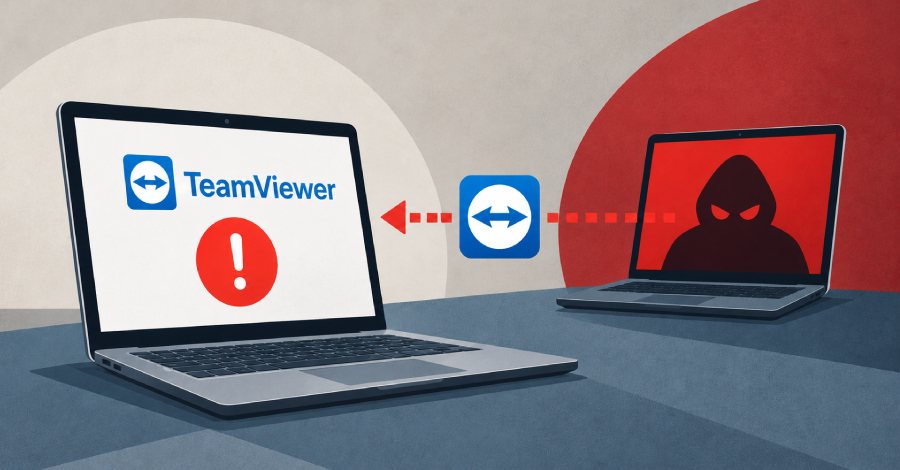
TeamViewer masofaviy sessiyada boshqariladigan mashina ulangan va boshqaruvni qo'lga olgan kompyuterga hujum qilish imkonini beradigan kamchilikni tuzatdi. TeamViewer sessiyasida ulangan va boshqaruvni qo'lga olgan kompyuter — bu ko'rib turuvchi (viewer), boshqariladigan mashina esa — bu xost (host).
Zararli yoki buzilgan xost bu kamchilikdan foydalanib, ko'rib turuvchining TeamViewer dasturini ishdan chiqarishi mumkin va platformaga qarab, ko'rib turuvchining kompyuterida kod ham ishga tushirishi mumkin. Bu faqat foydalanuvchi o'sha xostga masofaviy boshqaruv sessiyasini boshlaganidan keyin ishlaydi. Tuzatish TeamViewer 15.83 versiyasida mavjud.
Kamchilik CVE-2026-111585 sifatida kuzatiladi va 10 dan 8,8 ball bilan baholanadi, bu yuqori darajaga kiradi. U Windows, Linux va macOS'dagi TeamViewer Full Client, Windows Portable nashri va Android Remote Control ilovasiga ta'sir qiladi, 15.83 dan oldingi barcha versiyalarda.
Bu kamchilik uchun TeamViewer byulletenida Full Client, Portable va Android ilovasi ro'yxatga olingan, lekin Host emas. Xuddi shu 15.83 yangilanishi o'sha byulletendagi Hostga ta'sir qiladigan boshqa ikkita kamchilikni ham tuzatadi, shuning uchun Host ishlatayotganlar ham yangilanishi kerak.
Xavfsizlik firmasi Remedio'dan tadqiqotchi Omri Dar 29-oktabrda kamchilikning texnik tavsifini e'lon qildi. Bu xatoda u shunday yozdi: "hujumchi — bu xost, jabrlanuvchi esa — bu ko'rib turuvchi."
Masofaviy sessiyada xost ko'rib turuvchiga o'z ekran tasvirining o'lchamini aytadi. Ko'rib turuvchi bu o'lchamdan foydalanib xotirani ajratadi, lekin hisoblash to'lib ketishi mumkin va juda kam joy ajratiladi. Keyin keladigan ekran ma'lumotlari o'sha joyning oxiridan o'tib yoziladi.
Kamida bu ko'rib turuvchining TeamViewer sessiyasini ishdan chiqaradi va xost bu ishdan chiqarishni xohlagan vaqtda qayta ishga tushirishi mumkin.
Windows'da Remedio aytishicha, xato yanada chuqurlashtirildi, operatsion tizimning ichki ekspluatatsiya himoyalarini chetlab o'tib, ko'rib turuvchida o'z tanlagan kodini ishga tushirdi. Namoyishda xostda hujum ma'lumotlarining bir qismini ta'minlash uchun o'rinbosar ishlatilgan, shuning uchun bu hali to'liq tarmoq orqali amalga oshirilgan hujum emas.
Bu natija faqat Windows'da ko'rsatildi. macOS, Linux yoki Android'da ham xuddi shunday ishlashi mumkinligi yozuvda qamrab olinmagan. TeamViewer faqat kod bajarilishi mumkinligini, platformaga qarab, aytadi.
Hujum parol talab qilmaydi va sessiyani qabul qilishdan boshqa qo'shimcha bosish talab qilmaydi, va u TeamViewerning standart sozlamalarida ishlaydi, deb yozdi Dar. Kamchilik 15.83 dan oldingi barcha versiyalarga, shu jumladan TeamViewer sentyabrda chiqarilgan 15.82 xavfsizlik yangilanishiga ham ta'sir qiladi. O'tgan oy yangilanish bu kamchilikni bartaraf etmagan.
Nima Qilish Kerak
TeamViewer taklif qiladigan yagona tuzatish — yangilanish, va u hech qanday muqobil yo'l ro'yxatga olmagan. Hozirgi foydalanuvchilar 15.83 yoki undan keyingi versiyaga o'tishlari kerak. Eski qo'llab-quvvatlanadigan tarmoqlar uchun tuzatilgan qurilmalar yuqoridagi jadvalda keltirilgan.
Xuddi shu 15.83 yangilanishi o'sha byulletendagi boshqa ikkita yuqori darajadagi kamchilikni ham tuzatadi, shu jumladan Linux va macOS'ga ta'sir qiladigan alohida kod bajarish kamchiligini. Xuddi shu kuni e'lon qilingan TV-2026-1012 hamrohlik byulleteni TeamViewerning Remote Management qo'shimchalaridagi yana oltita kamchilikni tuzatadi, ular avtomatik yangilanish orqali yetkaziladi.
TeamViewer tuzatishni e'lon qilganida, kamchilikdan foydalanib hujum qilinayotganini bilmasligini aytdi. Bu zaiflik 29-oktabr ro'yxatiga ko'ra CISA'ning Ma'lum Ekspluatatsiya Qilingan Zaifliklar katalogida emas. Remedio yovvoyi tabiatda hujumlar haqida xabar bermadi va ekspluatatsiya kodini e'lon qilmadi.
TeamViewer has fixed a flaw that lets the machine being controlled in a remote session attack the computer that connected to control it. In a TeamViewer session, the computer that connects and takes control is the viewer, and the machine it controls is the host.
A malicious or compromised host can exploit the flaw to crash the viewer's TeamViewer and, depending on the platform, may also run code on the viewer's computer. This works only after the user starts a remote-control session to that host. The fix is in TeamViewer version 15.83.
The flaw is tracked as CVE-2026-111585 and scored 8.8 out of 10, in the high range. It affects the TeamViewer Full Client on Windows, Linux, and macOS, the Windows Portable edition, and the Android Remote Control app, in all versions before 15.83.
For this flaw, TeamViewer's bulletin lists the Full Client, Portable, and Android app, but not the Host. The same 15.83 update fixes two other flaws in that bulletin that do affect the Host, so people running the Host should update as well.
Omri Dar, a researcher at security firm Remedio, published a technical account of the flaw on October 29. In this bug, he wrote, "the attacker is the host and the victim is the viewer."
In a remote session, the host tells the viewer how large its screen image is. The viewer uses that size to set aside memory, but the calculation can overflow and reserve too little. Screen data that arrives afterward is then written past the end of that space.
At a minimum, this crashes the viewer's TeamViewer session, and the host can trigger the crash again whenever they want.
On Windows, Remedio says it took the bug further, bypassing the operating system's built-in exploit defenses and running code of its choosing in the viewer. The demonstration used a stand-in on the host to supply part of the attack data, so it is not yet an attack carried out entirely over the network.
That result was shown only on Windows. Whether the same works on macOS, Linux, or Android is not covered in the write-up. TeamViewer only says that code execution is possible, depending on the platform.
The attack needs no password and no extra click beyond accepting the session, and it works in TeamViewer's default setup, Dar wrote. The flaw affects all versions before 15.83, including 15.82, the security update TeamViewer released in September. Updating last month did not remove it.
What to Do
The only fix TeamViewer offers is to update, and it lists no workaround. Current users should move to 15.83 or later. The fixed builds for older supported branches are in the table above.
The same 15.83 update also fixes two other high-severity flaws in the same bulletin, including a separate code-execution flaw affecting Linux and macOS. A companion bulletin the same day, TV-2026-1012, fixes six more flaws in TeamViewer's Remote Management add-ons, delivered by automatic update.
TeamViewer said that when it published the fix, it was unaware of any attacks exploiting the flaw. The vulnerability is not in CISA's Known Exploited Vulnerabilities catalog as of its October 29 listing. Remedio reported no attacks in the wild and did not release exploit code.
Found this article interesting? Follow us on Google News, Twitter and LinkedIn to read more exclusive content we post.